


26
2026/10/
Technical Sharing
2026/10/26
Choosing production equipment is rarely just a purchasing decision. A machine that meets a specification sheet can still create expensive problems if it cannot integrate with upstream and downstream processes, adapt to product changes, support quality requirements, or scale with demand.

26
2026/10/
Technical Sharing
2026/10/26
Lithium-ion battery manufacturing is a chain of controlled operations, not a single assembly task. Performance and safety can be affected by uneven coatings, damaged electrode edges, moisture during assembly, or incomplete formation records. Manufacturers need to make each step repeatable while aligning equipment, material flow, and quality data.

26
2026/10/
Technical Sharing
2026/10/26
Automotive manufacturers need assembly processes that can repeat precise operations, detect defects early, and adapt when component designs change. Automotive automation brings robots, fixtures, material handling, sensors, and test equipment into a coordinated production process.

24
2026/09/
Industry News
2026/09/24
The root causes of these shortcomings lie mainly in the conveying process. Addressing this pain point, FHS has built an integrated conveying solution around its self-developed FTS Intelligent Maglev Conveyor System, covering main conveyor-line design, station interfaces, process cycle-time matching, and whole-line integration and commissioning.
22
2026/09/
Technical Sharing
2026/09/22
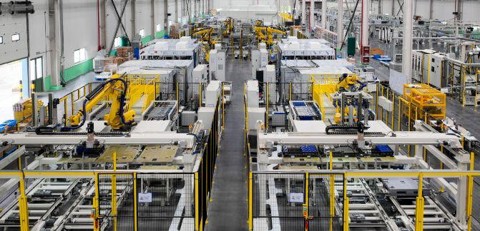
An automated manufacturing system is more than a robot, conveyor, or automated machine. A complete system combines production equipment, industrial control, material handling, inspection, software, and system integration to keep manufacturing processes coordinated and traceable.