Industry News
2026/09/24
Case Study | Breaking Dependence on Imports: FTS Intelligent Maglev Conveyor System Powers an Upgrade in Automotive Display Adhesive Dispensing
24
2026/09/
With the rapid adoption of new energy vehicles and intelligent cockpits, automotive displays have become a core interface for human-machine interaction. Their manufacturing processes demand ever-greater conveying accuracy, shorter cycle times, and higher cleanliness. These precision-panel production lines rely heavily on flexible, high-accuracy conveying equipment. Yet the industry has long relied on imports for high-end maglev conveying equipment. Long lead times, high costs, and slow service response have become common bottlenecks that constrain production-line upgrades and undermine supply-chain independence and control. Against this backdrop, replacing imported maglev conveyor systems with domestically developed alternatives has become a critical step in upgrading production lines.
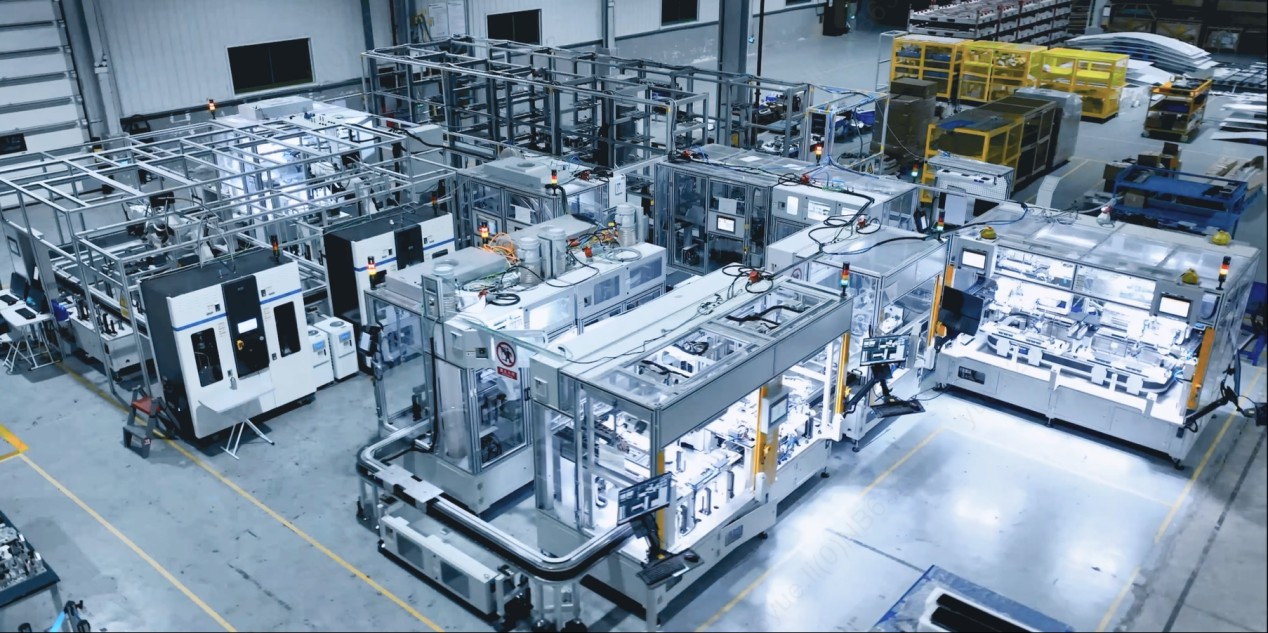
To meet the high-precision and high-cleanliness requirements of automotive display manufacturing, FHS's automatic adhesive-dispensing and lamination assembly line for intelligent automotive displays has now been deployed in production. The line integrates key processes including automatic loading, automatic adhesive dispensing, vision-guided lamination, and in-line inspection, and meets ISO Class 7 cleanroom requirements. Its conveying section uses FHS's fully in-house-developed FTS Intelligent Maglev Conveyor System, directly replacing the previously imported conveying units and localizing this critical conveying module.
Bottlenecks in Conventional Lines Constrain Upgrades
In the adhesive-dispensing and lamination process for automotive displays, conventional production lines have several shortcomings. Limited conveying accuracy leads to substantial workpiece positioning errors and severely restricts line performance. Complex equipment architecture and poor operating stability result in lengthy whole-line commissioning cycles and high commissioning and maintenance costs. Segmented conveying layouts require multiple material transfers between process steps, creating breaks in material flow and making fully closed-loop processing difficult to achieve.
FTS Rebuilds a Closed-Loop Intelligent Manufacturing Line with a Domestically Developed Solution
The root causes of these shortcomings lie mainly in the conveying process. Addressing this pain point, FHS has built an integrated conveying solution around its self-developed FTS Intelligent Maglev Conveyor System, covering main conveyor-line design, station interfaces, process cycle-time matching, and whole-line integration and commissioning. By replacing imported conveying components, the solution establishes an uninterrupted critical conveying path and gives the customer independent control over the entire line's conveying system.
1. Higher Precision, Simpler Mechanisms
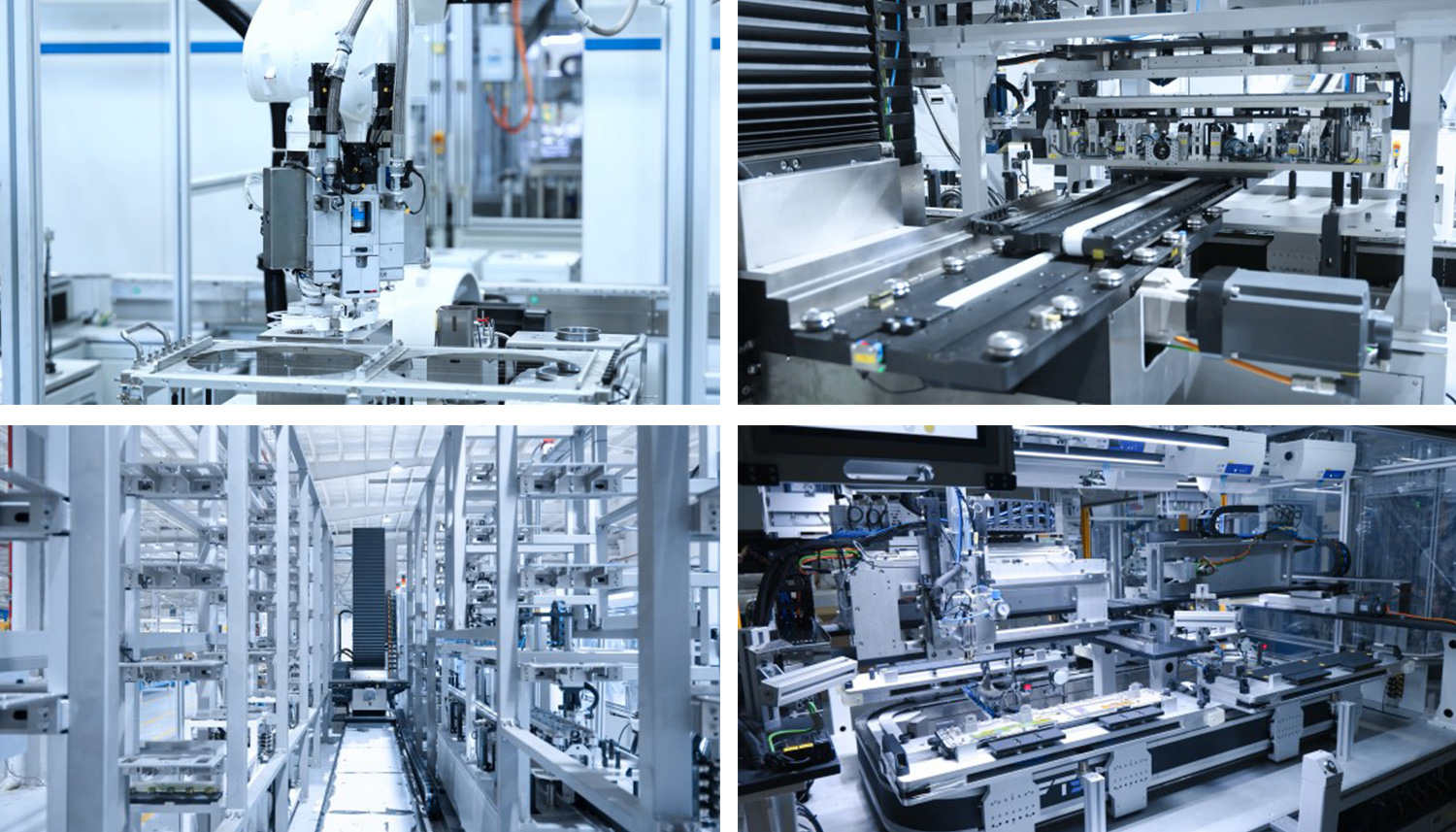
The FTS Intelligent Maglev Conveyor System achieves a repeat positioning accuracy of 0.01 mm, significantly reducing workpiece positioning deviations. With this higher positioning accuracy, the secondary positioning mechanism required in the original solution can be eliminated, reducing commissioning steps and potential failure points while shortening the whole-line commissioning cycle.
2. Movers as Motion Axes, for a Simpler Configuration
The system's movers can function directly as independent motion axes. Without additional transfer mechanisms, they can autonomously transfer and align workpieces across multiple stations, replacing some movements previously performed by robots and reducing the number of robots required. This significantly simplifies the line's mechanical structure, cutting hardware redundancy and reducing potential failures caused by mechanical wear, thereby further improving operating stability.
3. Seamless Process Integration for Closed-Loop Production
Leveraging the flexible material-handling capabilities of the FTS Intelligent Maglev Conveyor System, the line integrates automatic loading, in-line cleaning, automatic adhesive dispensing, vision-guided lamination, 3D inspection, and 100% AOI inspection in one seamless flow, creating a closed loop from material loading through finished-product unloading.
Measurable Benefits: A Domestically Developed Alternative Delivers Tangible Results
Since entering production, the FTS Intelligent Maglev Conveyor System has delivered clear, quantifiable benefits to the customer across several areas:
1. Shorter Delivery Cycles and Greater Supply-Chain Agility.
The critical conveying section no longer depends on overseas supply. Delivery lead times are significantly shorter than those of imported solutions, supply-chain response is more agile, and production-line planning is no longer constrained by external supplier lead times.
2. Lower Total Procurement and O&M Costs.
Lower Total Procurement and O&M Costs. The total cost of the production line has been reduced by more than 10%, with corresponding reductions in hardware investment and subsequent operation and maintenance costs.
3. Higher Production Efficiency and More Stable Yield.
The overall line cycle time is consistently kept within 26 seconds, conveying efficiency has improved substantially, yield rates for adhesive dispensing and lamination are more stable, and both capacity and quality targets are achieved.
The successful deployment of this project demonstrates that domestically developed maglev conveying equipment is fully capable of supporting high-end manufacturing applications such as adhesive dispensing for automotive displays. It also provides a replicable reference for the localization of similar high-end production lines. Looking ahead, with its higher accuracy, greater efficiency, and stronger adaptability across application scenarios, the FTS Intelligent Maglev Conveyor System will expand into more manufacturing sectors, provide customers with one-stop solutions, and continue to unlock tangible value in production.

Public Relations Officer
Miss Zeng
 info@ksfhs.com