Technical Sharing
2026/09/22
What Are the Key Components of an Automated Manufacturing System?
22
2026/09/
An automated manufacturing system is more than a robot, conveyor, or automated machine. A complete system combines production equipment, industrial control, material handling, inspection, software, and system integration to keep manufacturing processes coordinated and traceable.
For manufacturers planning a new production line or upgrading an existing one, understanding these components is important. The right combination can determine production speed, positioning accuracy, product quality, changeover efficiency, and the ability to expand the system later.
What Is an Automated Manufacturing System?
An automated manufacturing system is an integrated production environment in which machines, control systems, material flow, inspection equipment, and production software work together to complete manufacturing processes.
A standalone automated machine can perform a specific operation, but a complete manufacturing system connects multiple processes. A typical production flow may include:
Material input → Transport → Positioning → Processing/Assembly → Inspection → Data recording → Next process or nonconforming-product handling and rework
The exact architecture depends on the product, production volume, required cycle time, and quality requirements.

What Are the 7 Key Components of an Automated Manufacturing System?
The seven components below form the main technical layers of a modern automated production system.
| Component | Main Function |
| Industrial control systems | Coordinate machines, motion, timing, and process sequences |
| Processing and assembly equipment | Perform manufacturing operations |
| Material handling and flexible transport | Move and position products between stations |
| Sensors, vision, and inspection | Detect defects and verify process results |
| Manufacturing software and MES | Manage production data, traceability, and process information |
| Digital Twin and virtual commissioning | Validate system behavior before physical |
| Component | Main Function |
| System integration and standardization | Connect hardware, software, controls, and future expansion |
Industrial control systems coordinate the operation of the production line. Programmable logic controllers (PLCs), central control systems, motor control, and motion control manage machine sequences, positioning, speed, and communication between stations.
In a multi-station line, control is particularly important because one station's operation can affect upstream and downstream processes. Consistent control logic helps coordinate equipment and maintain the required production sequence.
2. Which Equipment Performs the Manufacturing Process?
Processing and assembly equipment performs the actual manufacturing operations, such as assembly, pressing, gripping, fastening, welding, and surface treatment.
The equipment must be matched to the product and process. In battery manufacturing, for example, automated systems may include cell stacking, module and pack assembly, and laser welding. In automotive applications, equipment can support motor and component assembly as well as body-in-white welding.
The key consideration is not simply whether a machine can perform a task, but whether it can operate as part of the complete production system.
3. How Does Material Handling Connect Production Stations?
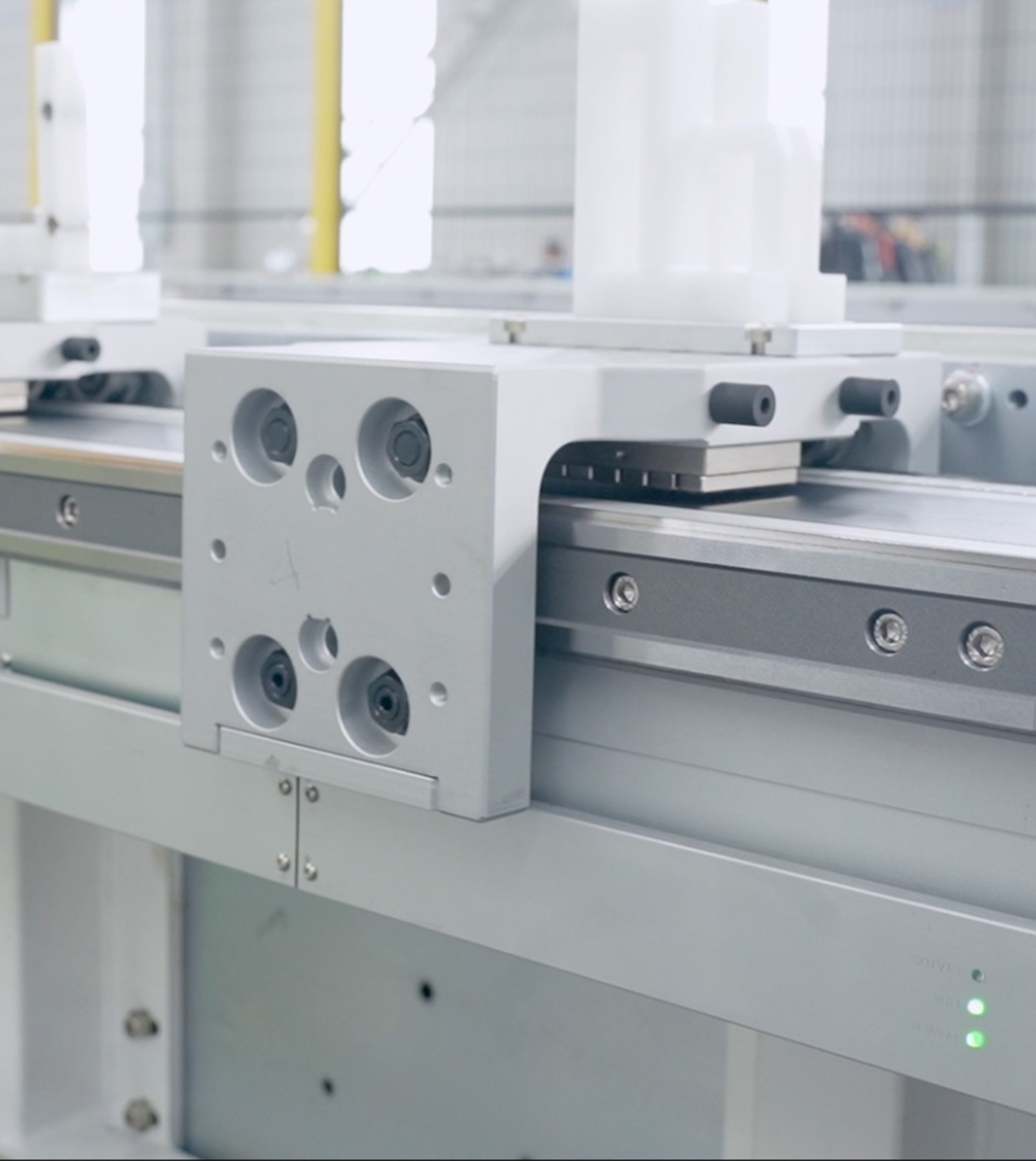
Material handling connects individual processes and directly affects production continuity. Conventional conveyors, automated guided vehicles (AGVs), indexing mechanisms, and flexible transport systems can be selected according to product characteristics and line requirements.
For applications with multiple product variants or frequent process changes, flexible transport can provide more adaptable routing and positioning. FHS's Flexible Transport System (FTS), for example, uses independently controlled movers and modular track sections. Its FTS-MT model provides repetitive positioning accuracy of ±0.01 mm and a maximum speed of 5 m/s for specific applications.
Material handling should therefore be evaluated together with cycle time, product weight, positioning requirements, buffering, and changeover needs.
 4. How Do Sensors, Vision, and Inspection Systems Control Quality?
Sensors and inspection systems provide the feedback needed to verify products and processes. Depending on the application, an automated line may use visual inspection, position detection, dimensional measurement, electrical testing, or leak testing.
Inspection should be integrated into the production flow rather than treated as a separate final step. For example, FHS applications include 2D and 3D vision, air-tightness testing, and linear position detection.
This approach allows manufacturers to identify quality issues at defined process points and record relevant production information for subsequent analysis or traceability.
5. What Does MES Add to an Automated Manufacturing System?
Manufacturing Execution System (MES) software connects production activities with manufacturing data. It can support production records, equipment status, traceability, process information, and communication between production equipment and higher-level manufacturing systems.
For automated lines, software becomes increasingly important as the number of machines and production steps grows. FHS develops MES-related software as part of its smart manufacturing technologies, helping connect equipment and production processes with manufacturing information.
The objective is not simply to collect more data, but to make production information usable for monitoring, traceability, and operational management.
6. How Do Digital Twin and Virtual Commissioning Support Automation Projects?
Digital Twin and virtual simulation can help manufacturers evaluate a system before physical commissioning. Simulation can be used to check production flow, equipment movement, cycle behavior, control logic, and potential interference.
Virtual commissioning is particularly useful for complex automated lines because changes made during physical commissioning can affect equipment schedules and project delivery.
FHS includes Digital Twin and Virtual Simulation & Debugging among its smart manufacturing technologies, supporting the validation and debugging of automated production systems before or alongside physical implementation.
7. Why Is System Integration and Standardization Essential?
System integration brings individual components together into one functioning production system. It covers electrical architecture, control interfaces, programming standards, communication, modular design, and coordination between machines.
Standardization also matters when a manufacturer expects future expansion. Consistent control structures and modular interfaces can make it easier to add stations, modify processes, or introduce new product variants.
For this reason, system integration should be considered from the beginning of an automation project rather than after individual machines have already been selected.
How Do These Components Work Together in a Production Line?
The components work as an interconnected system rather than as isolated technologies.
Material → Flexible transport → Positioning → Processing/Assembly → Inspection → Production data → Accepted product: Next process / Nonconforming product: Removal, isolation, or rework
For example, a product can be transported to a workstation, precisely positioned, processed by automated equipment, and then inspected by sensors or vision systems. The result can be recorded in the production system before the product moves to the next operation.
This interaction is what turns individual machines into an automated manufacturing system. A technically capable machine may still create bottlenecks if its control, material flow, inspection, or data interfaces are poorly coordinated.
 What Components Does Each Manufacturing Industry Need?
| Industry | Typical System Requirements |
| Battery & energy storage | Cell/module assembly, laser welding, flexible transport , inspection, testing, traceability |
| Automotive components | Automated assembly, motor-related processes, welding, robotics, precision positioning |
| Medical manufacturing | Precision assembly, inspection, testing, traceability, controlled process flow |
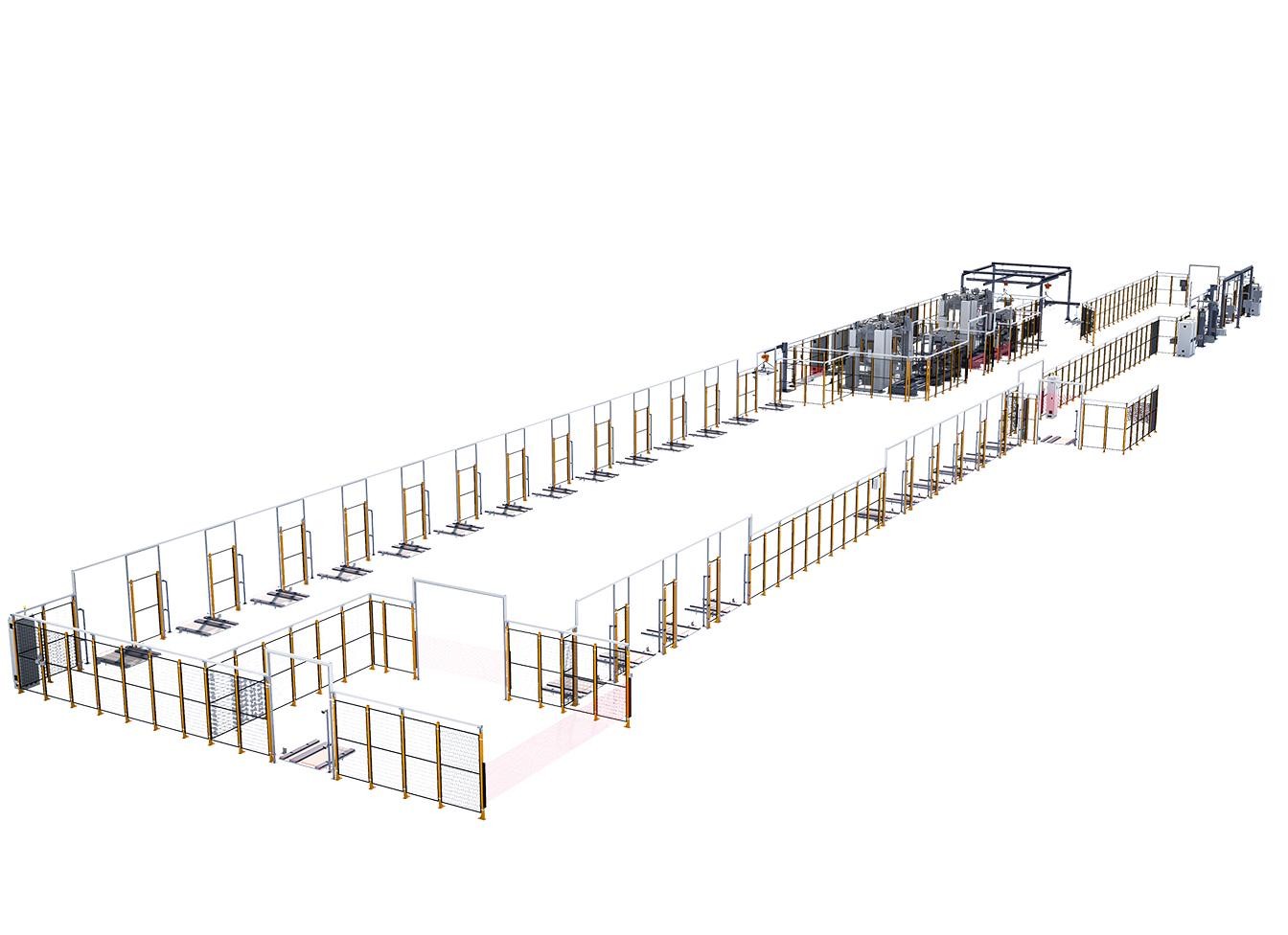
For battery and energy storage production, high-speed handling, precise positioning, welding, assembly, and testing are often closely connected. Automotive component production may require robotics, welding, motor assembly, and flexible production capabilities. Medical manufacturing places strong emphasis on process consistency, inspection, and testing.
The system should therefore be designed around the actual manufacturing process rather than copied from another industry.
How Should Manufacturers Design the Right Automated Manufacturing System?
Manufacturers should evaluate the entire production requirement before selecting individual machines or technologies. Key questions include:
1. What production volume and cycle time are required?
The system must provide sufficient throughput without creating bottlenecks between stations.
2. What are the product size, weight, and positioning requirements?
These factors influence equipment, tooling, transport, and motion-control selection.
3. How many product variants must the system handle?
Frequent changes may require flexible transport, modular tooling, and adaptable workstations.
4. What inspection and traceability requirements apply?
Quality checks, test systems, and production records should be planned as part of the line architecture.
5. How will the new system connect with existing factory systems?
Interfaces between equipment, controls, MES, and other manufacturing systems should be defined early.
6. How might the production line expand later?
Modular design and standardized interfaces can help accommodate future process or capacity changes.
These considerations help manufacturers select technologies based on production requirements rather than choosing automation components independently.
How Can FHS Support Automated Manufacturing System Projects?
FHS develops manufacturing automation and smart manufacturing technologies for industries including new energy, automotive components, and medical devices. Its capabilities cover several of the core layers required for automated production systems:
· Industrial control: central control, PLC, motor control, and motion control
· Manufacturing processes: assembly, battery processes, laser welding, and surface treatment
· Flexible transport: Flexible Transport Systems for high-speed and precision material movement
· Testing and inspection: vision inspection, position detection, and process testing
· Manufacturing software: MES-related software and vision software development
· Digital technologies: Digital Twin and Virtual Simulation & Debugging
· System engineering: modular electrical design and production-line integration
For manufacturers evaluating an automated manufacturing system, the main question is not which individual technology is most important. It is whether control, equipment, transport, inspection, software, and integration are designed to work together around the actual production process.
With experience in manufacturing automation and smart manufacturing, FHS develops manufacturing automation technology and integrated production solutions tailored to different production requirements, product characteristics, and automation objectives. Its capabilities span industrial control, processing and assembly, flexible transport, inspection, manufacturing software, and digital technologies, allowing these components to work together as part of an integrated automated manufacturing system.

Public Relations Officer
Miss Zeng
 info@ksfhs.com