Technical Sharing
2026/09/22
Smart Factory vs. Smart Manufacturing: What's the Difference?
22
2026/09/
Smart factory and Smart Manufacturing are often used as if they mean the same thing, but they describe different levels of manufacturing transformation. Smart manufacturing is the broader, connected and data-driven approach to improving manufacturing systems, while a smart factory is the factory-level environment where that approach is implemented.
This distinction matters when manufacturers plan digital transformation. A factory may automate a production line without creating a broader smart manufacturing system, while a smart manufacturing strategy can extend across multiple production processes, quality systems, data flows, and operational decisions. Understanding the relationship between the two helps manufacturers focus technology investments on measurable production and operational goals.
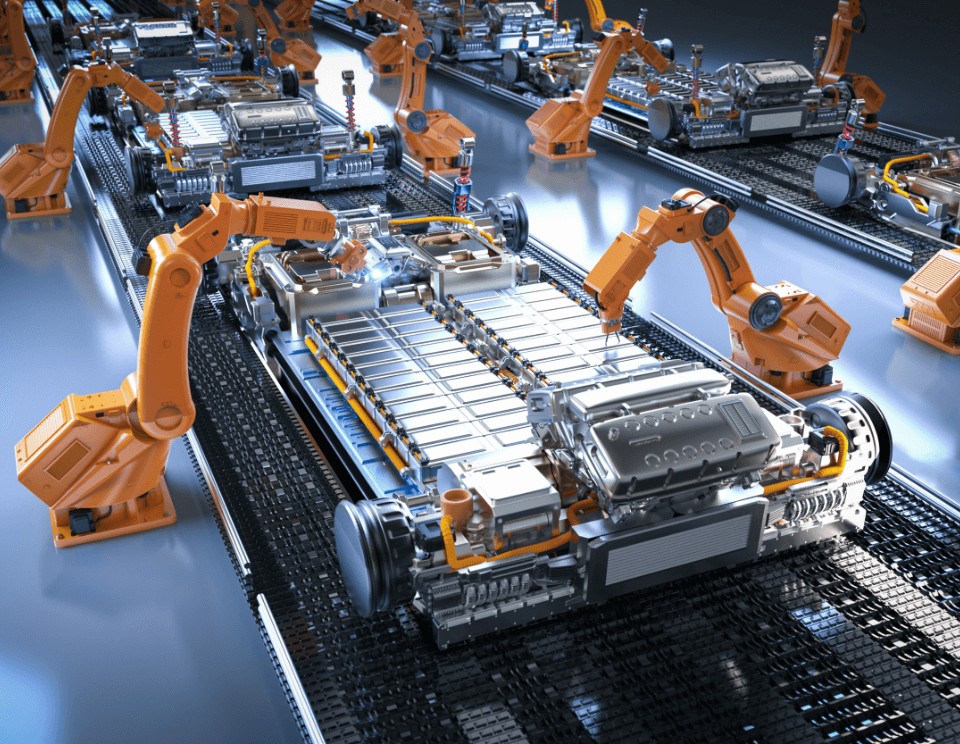
What Is Smart Manufacturing?
Smart manufacturing is a broader approach that connects production processes, equipment, data, quality, and operational systems to improve overall manufacturing performance. It is not a single software platform, machine, or automation technology.
A smart manufacturing approach can cover multiple areas of a manufacturing business:
| Area | Typical focus |
| Production | Process flow, capacity, and production execution |
| Quality | Inspection, testing, and traceability |
| Equipment | Control, utilization, and operating conditions |
| Data | Production, process, and quality information |
| Operations | Planning, coordination, and manufacturing decisions |
The key point is that these areas should work as part of a connected manufacturing system. For example, production data can help identify a process constraint, while quality data can show whether a process change is affecting product consistency.
This makes smart manufacturing broader than factory automation alone. Automation provides the means to execute many production processes consistently, while digital manufacturing technologies and connected systems help manufacturers understand and improve those processes.
What Is a Smart Factory?
A smart factory is a specific manufacturing site where connected equipment, production systems, controls, material handling, inspection, and data work together as an integrated production environment.
A typical smart factory may include:
· Automated production equipment
· Intelligent material handling
· Production control systems
· Automated inspection and testing
· Manufacturing Execution System (MES)
· Machine connectivity
· Real-time production monitoring
The important characteristic is not simply the presence of these technologies. A factory becomes smarter when machines, processes, and production information are no longer operating as isolated elements.
For example, an automated assembly station can perform a defined operation, an inspection system can verify the result, and production software can record the relevant information. When these elements are connected, manufacturers gain a clearer view of how production is actually performing.
In this sense, the smart factory represents the physical and operational implementation of broader smart manufacturing objectives.
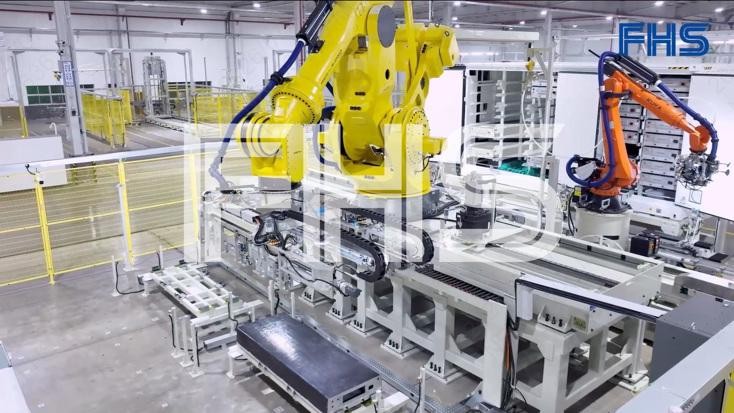
Smart Factory vs. Smart Manufacturing: What Is the Difference?
The simplest distinction is that smart manufacturing is the broader manufacturing approach, while the smart factory is an important factory-level implementation of that approach.
| Dimension | Smart Factory | Smart Factory |
| Scope | Single factory or production site | Broader manufacturing system |
| Focus | Production execution | Manufacturing optimization |
| Core | Machines, lines, and shop floor | Processes, data, systems, and strategy |
| Technologies | Automation, robotics, sensors, and control | Automation, digital systems, data, and connected processes |
| Goal | Efficient and coordinated factor y operation | Overall manufacturing performance |
This difference also explains why the terms should not be treated as interchangeable.
A smart factory focuses on what happens inside a production environment. Smart manufacturing takes a wider view of how production, quality, equipment, data, and operational decisions work together.
Automation is therefore an important foundation for a smart factory, but automation alone does not define smart manufacturing. Similarly, installing an MES platform does not automatically make a factory smart. The value comes from connecting these capabilities to actual manufacturing processes and measurable business objectives.
What Technologies Turn a Traditional Factory into a Smart Factory?
A traditional factory becomes smarter when production equipment, material flow, control systems, inspection, and production data are connected into a coordinated operating environment. The technologies involved should therefore be selected according to manufacturing requirements rather than adopted simply because they are associated with digital transformation.
Automated Production Equipment
Automated equipment performs standardized production operations such as assembly, welding, processing, and testing. It provides the physical execution layer of the smart factory.
Intelligent Control Systems
Programmable Logic Controllers (PLCs), motion control, motor control, and centralized production-line control coordinate equipment and production sequences. These systems help different operations follow defined process logic instead of operating independently.
Flexible Material Transport
Material handling is another important part of factory-level intelligence. Flexible transport systems can independently control movers, support high-precision positioning, and adapt material movement to different production sequences.
For example, FHS develops flexible transport technologies that use independent mover control and high-precision positioning. Its FTS-MT system specifies repetitive positioning accuracy of ±0.01 mm and a maximum speed of 5 m/s for its stated application. Such capabilities can help manufacturers design production lines around changing process requirements rather than fixed material-flow paths.
Automated Quality Inspection
Vision inspection, position detection, leak testing, and other automated testing methods allow quality checks to become part of production execution. Instead of treating inspection as a separate final step, manufacturers can connect test results with production and traceability information.
MES and Production Data
An MES can connect production activities with information such as production status, process data, quality results, and traceability records. This gives production teams more visibility into what is happening on the shop floor.
These capabilities form the foundation of practical manufacturing automation, connecting physical production with control and production information rather than treating automation as a collection of individual machines.
Digital Twin and Virtual Commissioning
Digital Twin and Virtual Simulation & Debugging technologies add a digital representation of the production environment. They can support production-line planning, process validation, and system debugging before or during physical implementation.
The objective is not to add another digital layer for its own sake. The value comes from using digital tools to reduce uncertainty when designing and improving the physical manufacturing system.
How Do Smart Factories Support Smart Manufacturing?
Smart factories provide the operational foundation through which broader smart manufacturing objectives can be implemented, measured, and improved.
The relationship can be understood as a continuous manufacturing cycle:
Smart Manufacturing Strategy → Smart Factory → Equipment and Control → Production and Quality Data → Monitoring and Optimization → Manufacturing Performance
A smart manufacturing strategy may establish goals for throughput, quality, flexibility, traceability, or production visibility. The smart factory then translates those goals into production processes, equipment, controls, material flow, inspection, and data collection.
Once production data becomes available, manufacturers can identify constraints, monitor process conditions, analyze quality results, and make more informed production decisions.
This means the smart factory is not the final objective. Its purpose is to provide the production environment needed to support broader improvements in manufacturing performance.
How Is Smart Manufacturing Applied in New Energy, Automotive, and Medical Production?
Smart manufacturing is applied differently across industries because each manufacturing environment has different requirements for volume, process complexity, quality, flexibility, and traceability.
| Industry | Manufacturing challenges | Smart Manufacturing focus |
| New energy | Multiple models, capacity expansion, traceability | Automated handling, assembly, testing, and data |
| Automotive | Complex processes, precision, production volume | Flexible production, control, and quality |
| Medical devices | Controlled processes and strict testing | Assembly, inspection, testing, and traceability |
In new energy and energy storage manufacturing, smart manufacturing can connect cell, module, pack, or container-related processes with automated handling, assembly, testing, and production data. FHS, for example, provides automation solutions for battery and energy-storage production, including automated production processes and flexible material movement.
In automotive and automotive-component manufacturing, the emphasis can shift toward precision, repeatability, high production volume, and the ability to accommodate different product configurations. Flexible transport and coordinated production equipment can support these requirements.
For medical device manufacturing, controlled assembly and testing are particularly important. Automated inspection, leak testing, electrical testing, and traceability can help integrate quality control more closely with production execution.
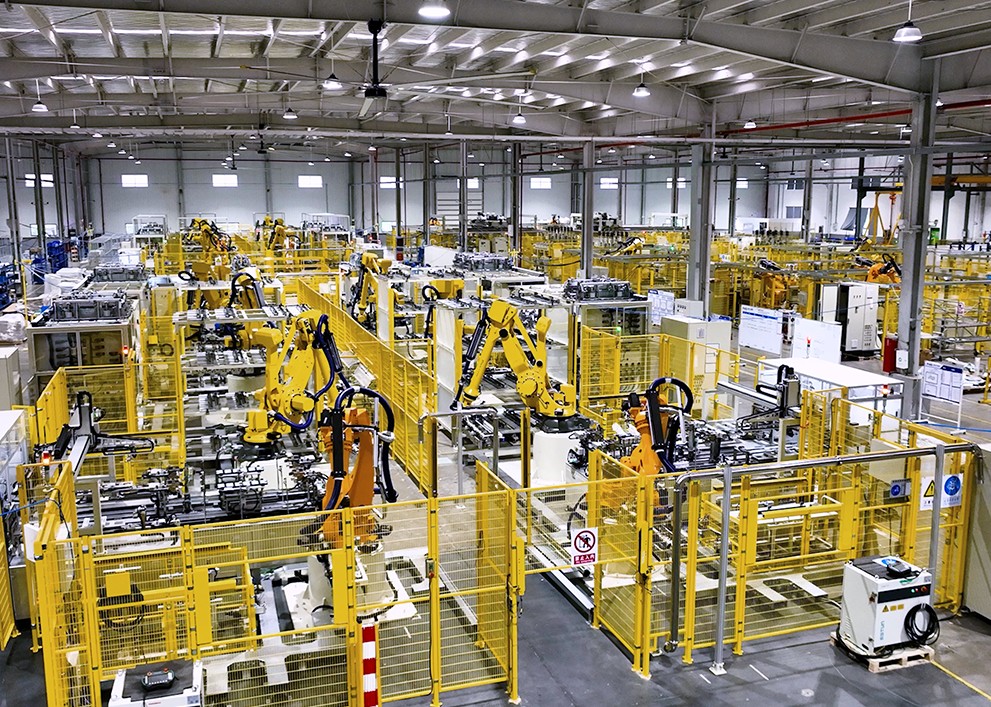
How Should Manufacturers Start Their Smart Factory Transformation?
Manufacturers should start with measurable production problems rather than choosing technologies first. A practical transformation can follow five steps.
1. Identify the production bottleneck.
Determine where cycle time, waiting, work-in-process, equipment utilization, or quality variation is limiting performance.
2. Define measurable manufacturing goals.
Set targets for cycle time, Overall Equipment Effectiveness (OEE), yield, changeover time, labor requirements, or traceability.
3. Determine which processes should be automated.
Prioritize repetitive, precision-sensitive, high-volume, or bottleneck operations where automation can address a clear production requirement.
4. Connect production and quality data.
Link equipment activity, process information, inspection results, and traceability so teams can understand production performance rather than viewing each data source separately.
5. Design for future flexibility.
Consider product variants, tooling changes, additional processes, capacity expansion, and future equipment integration before finalizing the production architecture.
This approach keeps smart factory transformation focused on manufacturing outcomes instead of turning it into a technology purchasing exercise.
How Can FHS Support Smart Manufacturing and Smart Factory Projects?
FHS supports smart manufacturing projects by combining manufacturing equipment, automated production lines, quality control, flexible manufacturing, and digital technologies within customized production systems.
FHS's capabilities include manufacturing automation, flexible transport, control technology, automated inspection and testing, Manufacturing Execution System (MES)-related software, Digital Twin technology, and Virtual Simulation & Debugging. These capabilities can be combined according to the requirements of specific production environments.
FHS serves manufacturing applications across EV batteries, energy storage, motors, automotive, automotive components, and medical devices. This allows project planning to focus on the relationship between production processes, equipment, material flow, quality control, and manufacturing data rather than treating each technology as a separate investment.
For manufacturers planning digital transformation, the distinction is straightforward: smart manufacturing defines the broader manufacturing approach, while the smart factory turns that approach into an operating reality on the production floor. The most effective transformation is therefore not about making a factory “smart” for its own sake, but about connecting manufacturing capabilities to clear production, quality, flexibility, and operational objectives.

Public Relations Officer
Miss Zeng
 info@ksfhs.com