Technical Sharing
2026/09/21
How Modular Automation Improves Flexibility in Prismatic Battery Manufacturing?
21
2026/09/
Global demand for high-capacity energy storage systems forces industrial facilities to optimize cell handling and structural joining. Microscopic dimensional variations in heavy enclosure walls or electrical contact tabs can induce thermal bottlenecks, elevating long-term operational risks. Transitioning toward adaptable module integration allows factory managers to refine cell loading, separator bonding, and busbar joining without halting entire lines during product redesigns. Modern prismatic battery manufacturing relies on harmonizing automated positioning devices with active inline inspection to stabilize yields across expanding production schedules. At FHS, we develop modular assembly architectures that allow plant directors to adapt processing steps cleanly as chemistry formats evolve.
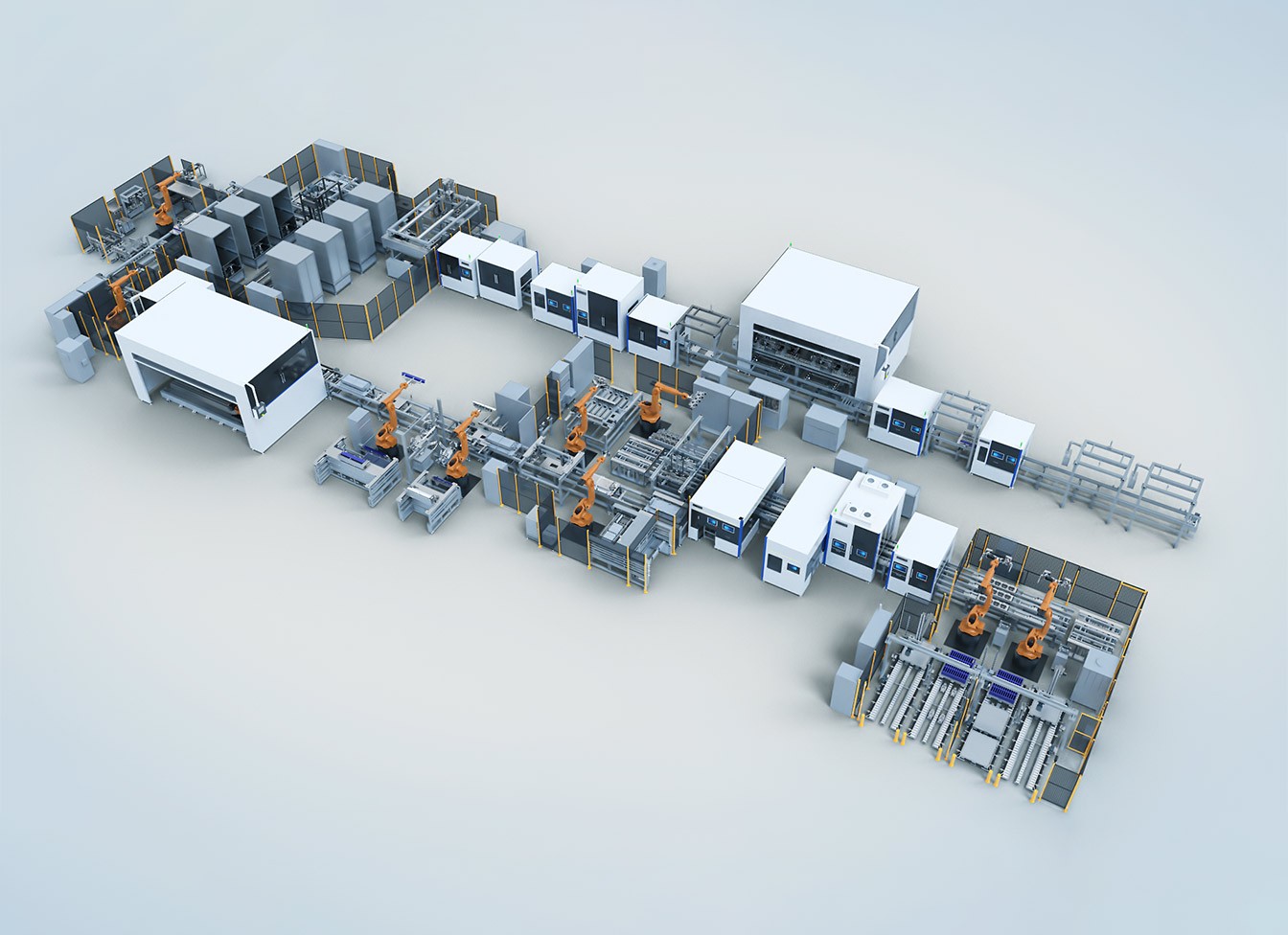 Modular Cell Stacking and Precision Mechanical Alignment
Mechanical tolerances during early cell grouping dictate whether finished packs maintain structural integrity over long operating cycles. When rectangular cell bodies arrive at loading stations, automated gantry systems scan initial Data Matrix Codes (DMC) to verify electrical characterization before placement. Vacuum grippers transfer individual units into position, applying calibrated compression forces to seat insulation separators evenly between metallic casings.
Consistent mechanical alignment prevents pressure concentrations that accelerate internal separator degradation during repeated charge cycles. Custom alignment channels secure small block cell stacks, maintaining exact spatial gaps prior to end plate pre-assembly. Working with experienced prismatic battery pack assembly line suppliers enables plant operators to integrate flexible clamping systems that accommodate minor casing dimensional shifts without damaging sensitive cell walls.
Plasma Surface Preparation and Laser Joining Dynamics
Contaminants on metal casings weaken adhesive bonding and laser weld penetration during side seam joining. Atmospheric plasma nozzles sweep across aluminum module side plates and cell terminals, stripping microscopic organic residues to maximize surface energy. Cleaning surfaces prior to adhesive dispensing creates durable structural bonds capable of withstanding heavy road vibration or industrial shock loads.
High-precision fiber lasers execute side seam welding and terminal busbar joins under continuous optical monitoring. Real-time vision sensors track seam trajectories, adjusting focal positions on the fly to compensate for part height variations. Processing cells focused on prismatic battery manufacturing utilize dynamic beam shaping to minimize spatter generation, protecting sensitive electronics from loose metallic debris.
Thermal Management and Fluid Interface Assembly
Heat dissipation across large battery enclosures requires uniform contact between cooling plates and module bases. Automated dispensing nozzles apply thermal conductive adhesives in precise geometry patterns, avoiding air pockets that act as thermal insulators. Laser profilers verify bead height and continuity before lower cooling assemblies meet cell blocks.
Integrating liquid cooling plate plasma cleaning, gluing, and mechanical tightening into synchronized assembly cells mitigates thermal resistance across structural joints. Servo-driven torque wrenches secure cooling plate fasteners to exact tension specs, preventing mechanical distortion of fluid channels. Establishing uniform thermal contact across every module protects long-term cell health under heavy power discharge demands.
Electrical Interconnects and Sensor Harness Placement
Secure electrical networks depend on clean contact surfaces and accurate fastener positioning. Dispensing systems apply insulating gels over delicate terminal connections before signal collection harnesses descend into place. Optical vision sensors confirm terminal post alignment, verifying that busbars sit flush against copper and aluminum contact pads prior to laser firing.
Technicians install CCS and CSC modules within automated assembly cells to establish continuous voltage and temperature telemetry monitoring. High-speed laser welding heads join terminal tabs with low electrical resistance, preserving power efficiency across connected cell arrays. Upgrading assembly hardware through reliable prismatic battery pack assembly line suppliers equips manufacturing facilities to execute complex busbar welding routines with minimal thermal transfer into underlying cell chemistry.
End-of-Line Diagnostic Testing and Traceability Protocols
Non-destructive evaluation protocols verify electrical insulation, fireproof tape application, and thermal continuity before pack discharge. Automated End-of-Line (EOL) test stations execute high-voltage isolation checks, On-Off functional verifications, and internal resistance measurements across fully assembled units. Integrated weigh scales confirm total structural mass, catching omitted components or improper gel dispensing before final pack sealing.
Enterprise software networks bind DMC scanning metrics with torque logs, plasma cleaning parameters, and weld power figures under individual serial numbers. Digital data logging simplifies regulatory compliance reporting while enabling rapid root-cause analysis if field anomalies occur years later. Partnering with seasoned prismatic battery pack assembly line suppliers helps industrial plants establish end-to-end component traceability across high-volume production operations.
Enterprise Control Systems and Data-Driven Line Optimization
Connecting physical assembly machinery to centralized supervisory networks provides plant directors total clarity over line performance. Real-time telemetry streams from laser profilers, torque drivers, and electrical testers feed central statistical process control models, flagging mechanical tool wear before tolerances drift into scrap territory. Automated diverters re-route flagged sub-assemblies to designated repair loops without interrupting main line flow.
Digital twin simulation platforms mirror physical machinery operations, allowing controls engineers to evaluate cycle time modifications virtually before updating live PLC code. Predictive maintenance algorithms monitor motor current draws and thermal readings on mechanical transfer arms, scheduling component swaps during planned maintenance pauses. At FHS, we connect digital tracking tools with our semi-automated power battery module and pack assembly line setups, helping manufacturing teams maintain stable yields across multi-shift production runs.
Pioneering Scalable Architecture in Modular Battery Production
Sustaining high component accuracy across expanding power pack projects requires combining flexible mechanical handling, surface cleaning, and automated inspection. Eliminating physical transfer shocks and automating delicate joining processes shields high-density battery packs from thermal and mechanical defects. Adopting adaptable assembly strategies gives high-volume manufacturing facilities the structural foundation needed to scale production cleanly.

Public Relations Officer
Miss Zeng
 info@ksfhs.com