Technical Sharing
2026/09/21
High-Speed Linear Transfer Systems vs. Conventional Conveyors: Which Is More Energy Efficient?
21
2026/09/
Continuous operation of heavy industrial conveyors consumes immense electrical energy across automated production plants. Standard friction-based belts, chain loops, and rotary roller beds rely on constant mechanical contact, dissipating substantial power as heat while fighting mechanical drag. Modern plant managers seeking lower carbon footprints and reduced operating costs increasingly investigate dynamic high-speed linear transfer systems to optimize shopfloor power consumption. Engineering teams at FHS configure these direct-drive transport modules to elevate power efficiency across demanding high-throughput production lines.
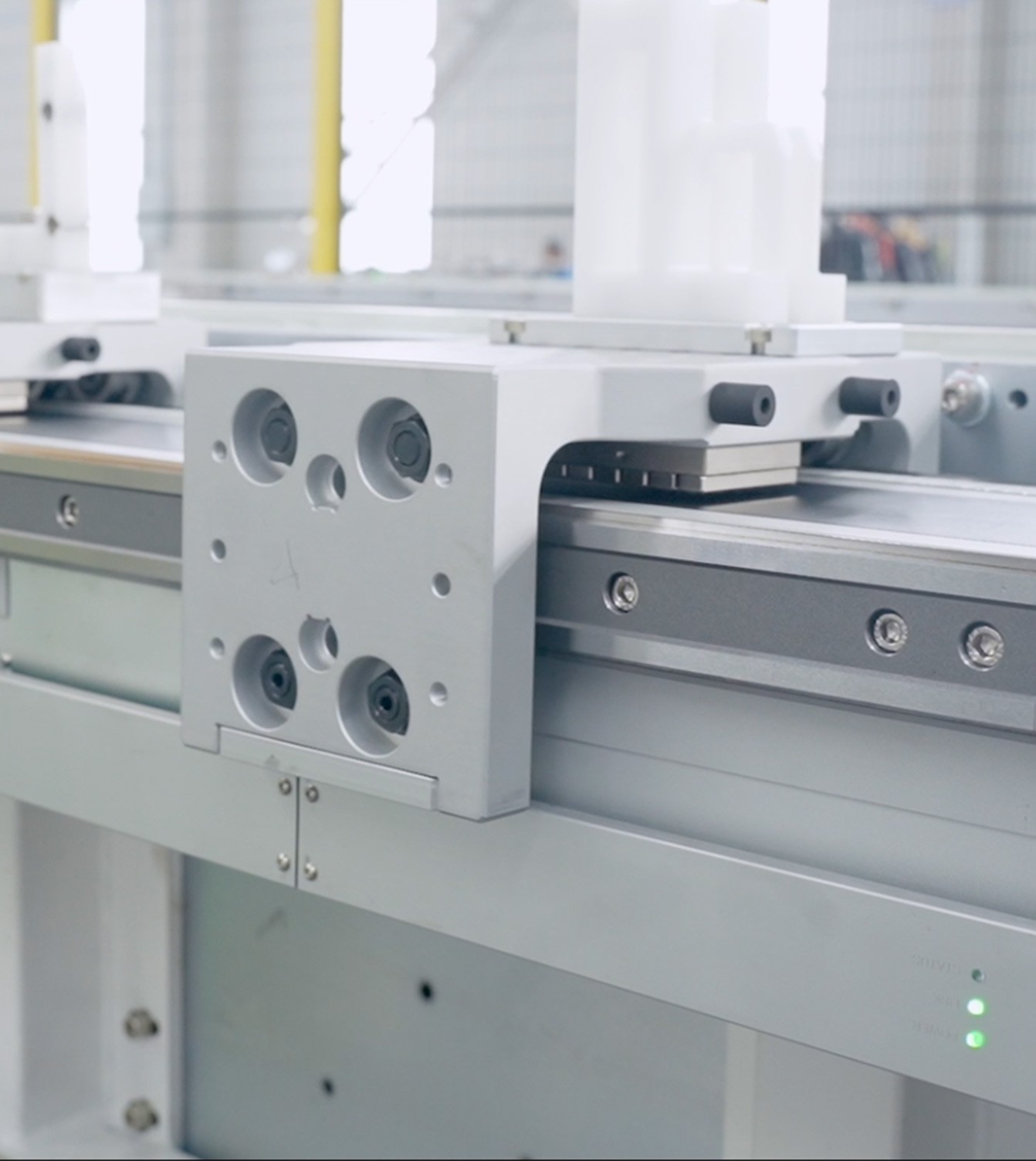 Electromagnetic Power Conversion and Friction Mitigation
Mechanical transmission components like gearboxes, drive belts, and drive shafts inevitably lose rotational energy through physical surface contact. Direct electromagnetic propulsion transfers electrical energy straight into magnetic field thrust, eliminating intermediate mechanical linkages altogether. Utilizing magnetic force rather than mechanical friction allows payload carriers to glide smoothly along guidance tracks with negligible physical drag.
Electromagnetic drive coils deliver power directly to active track zones, concentrating energy exclusively where carriers are currently located. Inactive track segments remain powered down until an approaching mover triggers dynamic energization, preventing continuous power consumption across idle line sections. Removing continuous mechanical friction while selectively energizing track segments sharply improves total electrical-to-kinetic energy conversion ratios.
High-Density Iron Core Drives for Maximum Magnetic Efficiency
Maximizing thrust output while minimizing current draw requires optimizing the electromagnetic core geometry within drive modules. Incorporating an Iron Core Motor for Superior Magnetic Drive Performance amplifies flux density within the drive gap, generating higher driving force per watt of input electricity. This optimized magnetic circuit design accelerates heavy movers rapidly without demanding excessive power surges from the main electrical supply.
Higher power density allows compact track modules to carry substantial payloads without requiring oversized electrical cabinets or auxiliary cooling systems. Superior energy conversion efficiency preserves low internal operating temperatures during continuous, high-speed acceleration sequences. Deploying magnetic drive modules equipped with high-efficiency iron cores reduces electrical operational overhead across multi-shift production runs.
Instantaneous Startup Protocols and Zero-Cycle Mover Recognition
Conventional automated tracking frameworks often waste energy and production time running homing routines or mechanical alignment cycles prior to active operation. RFID-based location systems typically require movers to complete full track revolutions simply to calibrate carrier identity and positional coordinates. Replacing RFID setups with real-time mover ID recognition allows system controllers to identify carrier positions instantly upon power startup, bypassing pre-operational indexing cycles.
Instant mover identification prevents unnecessary track idling and reduces power waste during line restarts. Immediate operational readiness translates directly into reduced shift energy consumption and faster overall batch processing. Integrating dynamic position detection with an intelligent conveyor system enables continuous, instant-start material handling across variable assembly workflows.
Energy Management Through Regenerative Deceleration
Decelerating heavy payloads on traditional mechanical conveyors relies on physical friction brakes or pneumatic stoppers, turning kinetic energy into wasted heat and mechanical wear. Electromagnetic linear drives reverse their stator polarities during braking sequences, acting as generators that harvest kinetic energy from slowing movers. Regenerative braking systems convert stopping momentum back into usable electrical energy, feeding power back into local DC bus networks to power adjacent accelerating carriers.
Recapturing braking energy drastically reduces overall net power draw across dynamic transfer tracks that perform frequent start-stop indexing. Dynamic power distribution balances electrical loads across multi-carrier loops, smoothing out sudden current spikes on the facility's power grid. Reusing deceleration energy lowers overall facility utility costs while reducing mechanical thermal stress on surrounding equipment.
Distributed Debugging Frameworks and Integration Efficiency
Commissioning long industrial transport lines traditionally demands extensive motor running tests that consume electricity while engineers fine-tune mechanical tolerances manually. Modern control architectures implement distributed parallel debugging with multiple terminals, enabling software technicians to calibrate multiple track sections simultaneously. Multi-terminal access accelerates system setup, reducing test-run energy consumption and cutting overall equipment integration timelines.
Dual safety management combining reliable software control permissions with robust mechanical limits protects physical machinery during commission phases. Accelerating line setup limits electrical burn-in testing while keeping drive hardware within safe operational parameters. Streamlining system deployment helps manufacturing teams achieve peak operational efficiency without prolonged commissioning power expenditures.
Software-Driven Speed Optimization for Energy-Aware Operations
Dynamic motion control software continuously adjusts acceleration curves, carrier velocity profiles, and queue spacing based on real-time station demand. Rather than running all transit tracks at maximum speed indiscriminately, central controllers scale mover velocity dynamically to match downstream station availability. Operating transport segments at optimized speeds lowers peak electrical draw while preserving component quality across high-volume production cycles.
Integrated digital twin monitoring tools model total power draw continuously, highlighting energy-intensive track segments for software refinement. Analytics software identifies mechanical drag or minor rail misalignment by tracking electrical current draw variations on individual movers. Leveraging data-driven velocity scaling alongside an intelligent conveyor system keeps high-throughput production lines running within tight energy efficiency parameters.
Advancing Factory Sustainability Through Motion Innovation
Replacing continuous mechanical drive lines with direct-drive electromagnetic systems represents a major leap forward for industrial energy efficiency. Eliminating friction losses, capturing deceleration energy, and deploying iron-core magnetic drives allows modern facilities to scale output velocity while suppressing total utility consumption. Installing advanced high-speed linear transfer systems grants high-volume manufacturing facilities the mechanical and electrical efficiency needed to meet strict operational sustainability goals.
Our technical teams at FHS build custom direct-drive conveyance networks that unify rapid material transport, smart software control, and exceptional power conservation. Combining high-density magnetic hardware with real-time tracking algorithms allows manufacturers to shorten production cycles cleanly without wasting energy assets. Sustainable manufacturing success ultimately hinges on harmonizing rapid material movement with intelligent, energy-efficient motion design.

Public Relations Officer
Miss Zeng
 info@ksfhs.com