Technical Sharing
2026/09/21
Linear Transport Systems for High-Speed, Low-Impact Material Handling
21
2026/09/
Accelerating throughput demands on high-volume factory floors frequently exposes the mechanical limitations of traditional friction-driven belts and roller tracks. High-speed transfers typically induce sudden inertia changes, vibration spikes, and physical wear, which risk fracturing delicate electrical contacts or scratching polished housings. Factory engineers seeking to optimize velocity while shielding sensitive assemblies increasingly deploy dynamic linear transport system architecture across critical production zones. Our engineering specialists at FHS configure these direct-drive transfer platforms to reconcile aggressive speed requirements with strict component safety standards.
Direct Electromagnetic Propulsion and Kinematic Stability
Replacing rotary mechanical motors with direct electromagnetic propulsion shifts material movement away from physical gear contact toward pure magnetic field actuation. Coils distributed along the track surface create moving magnetic fields that engage permanent magnets mounted beneath payload carriers, pulling them forward cleanly. Precise current manipulation allows systems to execute extremely soft start-stop cycles, protecting fragile workpieces from micro-shocks.
Modulating current frequencies across active stator coils grants sub-micron position feedback during active transit. Independent mover control prevents mechanical collisions along crowded track loops, avoiding the abrupt deceleration spikes typical of mechanical indexers. Eliminating drive belts, chains, and complex gearing lowers friction losses, keeping energy dissipation minimal while preserving precise spatial orientation.
Decoupled Station Dwell Times and Dynamic Queue Management
Synchronized transfer lines enforce a single, uniform cycle time across every workstation, forcing fast assembly cells to sit idle while bottleneck stations finish lengthy tasks. Decoupling individual movers from master mechanical drive drives allows workpieces to advance independently as soon as local processing concludes. Integrating an intelligent conveyor system enables variable station dwell times, ensuring that high-precision optical scanning or dispensing operations run without stalling adjacent manufacturing cells.
Asynchronous carrier movement permits dynamic buffering, where incoming carriers form soft queues upstream of slower processing stations. Parallel processing loops can accept overflow workpieces automatically, balancing operational workloads across redundant processing stations. Optimizing carrier routing across the shop floor stabilizes overall line output without subjecting workpieces to harsh physical braking.
Wear Mitigation and Frictionless Precision Positioning
Traditional mechanical transfer setups utilize physical pin locks and pneumatic hard stops to fix carrier positions prior to tool engagement. Continuous impact forces between physical stop pins and metal carrier plates generate micro-particulates, while introducing mechanical chatter that undermines measurement accuracy. Electromagnetic positioning systems apply localized counter-currents to bring movers to a smooth, non-contact standstill within micrometers of target coordinates.
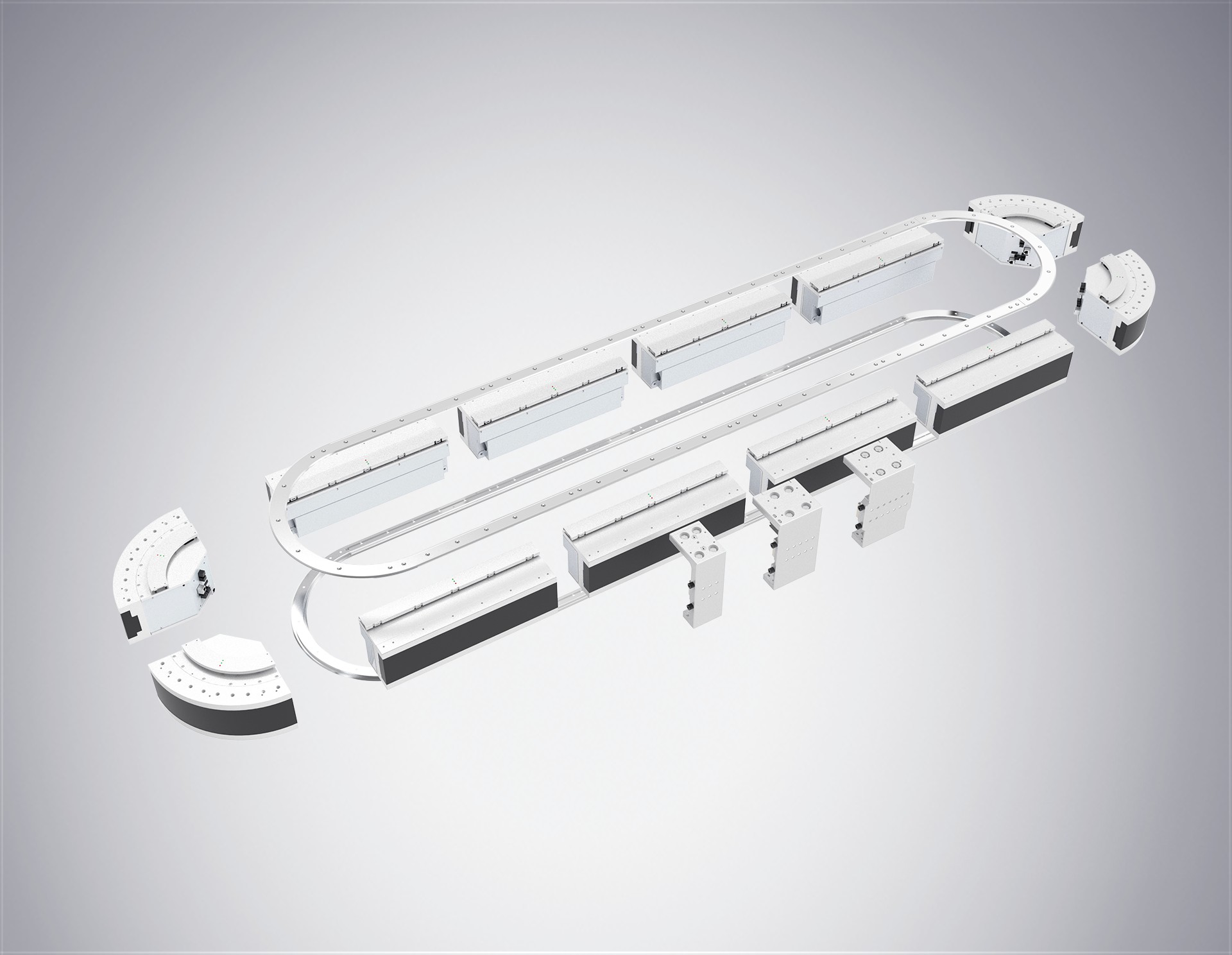
Integrating specialized hardware like the Intelligent Flexible Transport System allows production lines to achieve continuous position control with negligible mechanical wear. Utilizing linear motor technology, this platform precisely controls electromagnetic force to drive magnet-equipped movers across circular guide rails, combining magnetic drive modules with centralized control algorithms to deliver high-speed, high-precision material handling. Minimizing physical contact points protects cleanroom processing zones from metal shavings while reducing routine maintenance interventions on guidance hardware.
Active Thermal Management and Energy Recovery Efficiency
Rapid acceleration profiles generate heat within stator windings during heavy payload transfers, raising local ambient temperatures along transit paths. Uncontrolled heat radiation into structural frames can induce minor thermal expansion, altering mechanical rail alignment and affecting measurement accuracy in nearby vision stations. Integrated liquid cooling channels alongside active thermal monitoring systems draw heat away from drive coils, maintaining structural stability across continuous multi-shift operations.
Direct-drive motor architectures demonstrate superior electrical-to-mechanical energy conversion efficiency compared to conventional rotary motor setups. Power is delivered exclusively to track segments actively supporting a carrier, preventing energy waste on empty sections of the guide rail. Regenerative braking systems harvest kinetic energy during carrier deceleration, converting stopping force back into usable electrical power that feeds adjacent drive modules.
In-Line Telemetry and Predictive Maintenance Analytics
Embedding smart sensor arrays directly into transport track modules enables continuous monitoring of carrier speed, operational temperature, and power draw metrics. Data acquisition hardware transmits real-time telemetry to central supervisory platforms, tracking operational performance for every mover traversing the facility. Advanced software analyzes current draw variations to detect subtle mechanical drag, alerting maintenance crews before guide rail wear affects positioning accuracy.
Digital twin software mirrors physical carrier movements in real time, simulating track layout modifications virtually before engineering teams adjust physical hardware configurations. Tracking total mileage and operational force profiles for each carrier simplifies scheduled maintenance routines. Connecting physical conveyance hardware to centralized analytics platforms bridges mechanical operation with intelligent factory monitoring.
Adaptable Modular Infrastructures for Future Line Upgrades
Future-proofing high-volume assembly lines relies on deploying adaptable material transfer platforms capable of handling multiple product revisions on shared tracks. Reconfiguring conventional mechanical conveyors demands extensive structural tear-outs, extended downtime, and costly re-engineering effort. Modifying programmable software pathways on direct-drive transport systems enables instant adjustments to carrier speeds, dwell points, and queue sequences without physical line modifications.
Deploying versatile material handling networks allows industrial enterprises to scale operational capacity in step with shifting market demand. Utilizing an intelligent conveyor system gives factory directors the agility needed to process multiple product variants simultaneously on a single, high-yielding line. Establishing flexible, soft-landing material handling routines preserves product quality while maximizing daily operational throughput.
Unlocking Production Efficiency via Intelligent Motion Design
Resolving the conflict between rapid material movement and fragile component protection requires shifting away from mechanical friction drives toward direct electromagnetic motion control. Eliminating physical stop pins, decoupling station dwell times, and leveraging continuous machine telemetry enables modern factories to boost production output while protecting fine mechanical tolerances. Adopting an advanced linear transport system provides high-tech manufacturing plants with the structural stability necessary to run continuous, zero-defect operations.
Engineers at FHS collaborate closely with global manufacturing teams to deliver agile conveyance platforms tailored to demanding industrial applications. Unifying direct-drive mechanics with intelligent software control enables production managers to shorten station cycle times while safeguarding component quality. Sustainable operational growth in modern high-volume manufacturing ultimately relies on pairing high-speed material movement with flexible, friction-free motion control.

Public Relations Officer
Miss Zeng
 info@ksfhs.com