Technical Sharing
2026/09/21
Maintaining Consistent Quality Across Multi-Shift Medical Device Production
21
2026/09/
Operating commercial assembly lines around the clock introduces physical operational challenges, particularly when manual human variance shifts cycle times and assembly force metrics between day and night rotations. In modern medical manufacturing plants, subtle deviations in operator technique during component placement or adhesive application risk compromising sterile fluid paths or structural sealing integrity. Transitioning toward specialized medical device assembly automation allows manufacturing managers to lock in precise mechanical metrics, stabilizing cycle execution regardless of shift changes. Our team at FHS designs these stabilized operational workflows to maintain exact structural repeatabilities across complex high-volume production schedules.
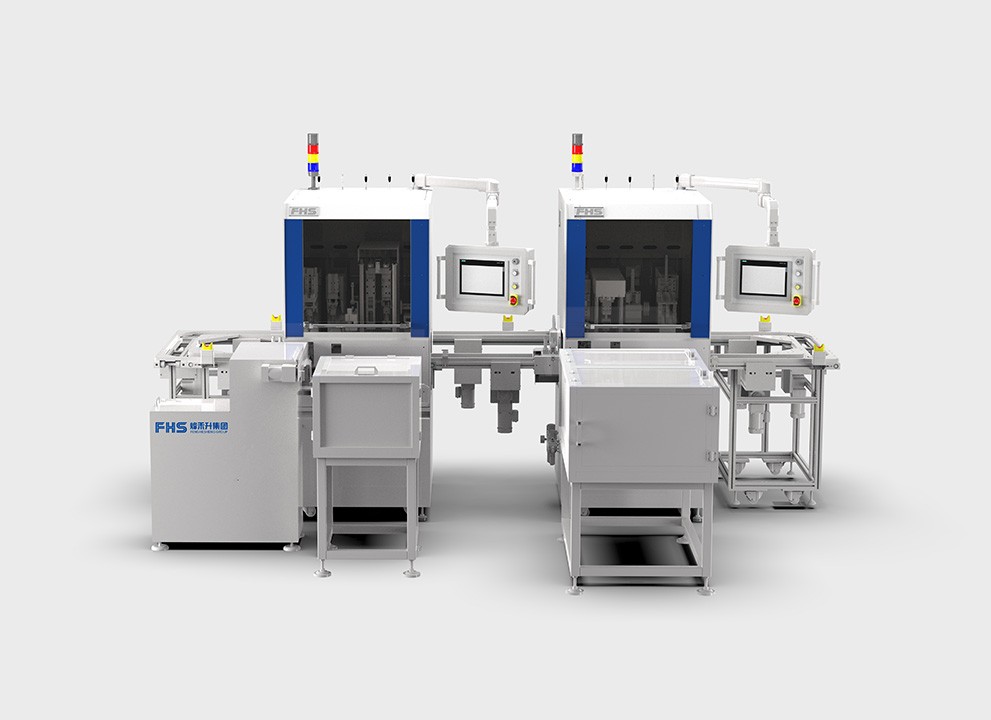
Standardizing Kinematic Execution and Force Application
Replacing operator-dependent assembly steps with servo-driven mechanical arms protects delicate plastic housings from structural strain during high-speed insertion steps. Traditional pneumatic actuators often exert variable closing forces as air pressure fluctuates throughout long manufacturing shifts, introducing micro-variations into finished component joints. Multi-axis electric motion platforms deliver consistent rotational torque and linear force profiles, preventing joint damage and component misalignment.
Programmable motion profiles allow equipment to execute multi-stage pressing and snapping sequences with sub-micron spatial control. Integrated load cells monitor applied resistance continuously, terminating motion profiles instantly if joint resistance strays outside acceptable boundaries. Eliminating manual handling variability keeps physical component metrics predictable across consecutive operational runs.
Reducing Indexing Overhead and Optimizing Processing Cadence
Uncontrolled station delays and uneven indexing cycles create production bottlenecks that lengthen product delivery timelines across global distribution networks. Synchronizing mechanical indexing drives with high-speed sensor readings reduces overall dwell times at each workstation, establishing an optimized cycle time that accelerates commercial throughput. Streamlined mechanical transfer sequences allow factories to process complex multi-part sub-assemblies efficiently without compromising physical precision.
Dynamic motion synchronization ensures secondary processes—such as UV curing, ultrasonic welding, or optical scanning—occur while sub-assemblies travel along transfer tracks. Eliminating unnecessary pause times between processing cells maximizes capital equipment utilization without subjecting components to sudden mechanical stops. Maintaining a uniform operational cadence stabilizes shift output while protecting delicate component joinery.
Modular Systems Architecture and Production Scalability
Healthcare device portfolios often incorporate distinct dimensional variations across product families, necessitating equipment designs that adjust rapidly to new product specifications. Rigid, single-purpose assembly cells incur extensive mechanical retooling downtime during product changeovers, causing costly idle periods for plant personnel. Implementing modern medical device automation systems gives plant operators flexible solutions featuring customizable designs that adapt to various types of medical devices, supporting both low-volume prototyping and full-scale commercial manufacturing.
Quick-change tooling plates alongside programmable servo positioning axes allow operators to switch product profiles without manual alignment checks. Standardized control software frameworks manage parameter recipes across multiple device sizes, applying proper force curves and dispense paths automatically. Modularity allows manufacturing facilities to adjust production scales seamlessly as market demand shifts.
Continuous Process Telemetry and closed-Loop Monitoring
Monitoring mechanical variables in real time prevents subtle operational drift from converting into downstream scrap events. Integrated sensor networks evaluate press depth, adhesive bead thickness, and fastener torque continuously during active assembly runs, storing metric telemetry for every serial number. Closed-loop control algorithms adjust servo speeds and actuator forces dynamically, keeping process variables anchored within tight tolerance windows.
When internal sensors detect thermal or mechanical parameters creeping toward specification limits, automated control systems adjust input variables before out-of-spec parts are generated. Sub-assemblies failing interim force or dimensional checks are automatically routed to secondary inspection stations without interrupting main line flow. Continuous automated feedback secures multi-shift output quality without relying on manual spot checks.
Environmental Isolation and Material Quality Control
Sustaining consistent component quality across continuous operational shifts requires isolating active assembly zones from ambient factory floor variations. Fluctuations in workshop temperature, relative humidity, and airborne particle counts can alter adhesive viscosity or cause minor material expansion in delicate plastic moldings. Climate-controlled internal enclosures equipped with positive-pressure HEPA air filtration maintain an isolated processing environment, preserving material properties across multi-shift runs.
Automated raw material feeder bowls and tape-and-reel handlers feed components into pristine processing chambers without requiring frequent human intervention. Automated cleaning routines run periodically during active production, removing residual flash or particulate buildup from mechanical grippers. Controlling environmental factors shields micro-assembly processes from external atmospheric changes.
Digital Traceability and Unified Operations Oversight
Collecting comprehensive machine telemetry simplifies regulatory compliance reporting while enabling plant-wide performance tracking. Programmable logic controllers log detailed operational histories—including vision inspection images, press-fit force curves, and fluid dispensing weights—directly into centralized enterprise software. Storing unified digital records ensures complete component traceability across every manufacturing shift.
Digital twin software platforms mirror physical machine operations continuously, analyzing cycle times and sensor outputs to identify potential component wear before mechanical failures occur. Maintenance crews receive predictive service alerts, allowing them to replace worn grippers or seals during planned operational pauses. Centralizing digital supervisory data gives factory leadership clear visibility into multi-shift production metrics.
Building Long-Term Excellence in Medical Device Manufacturing
Sustaining high component accuracy across consecutive factory shifts relies on replacing manual handling with adaptive, closed-loop machine controls. Removing human physical variability stabilizes cycle times, protects cleanroom sterility, and provides complete traceability for complex healthcare products. Upgrading processing facilities with modern medical device automation systems establishes the operational stability necessary to meet stringent international quality regulations consistently.
Through collaborative engineering efforts, our specialists at FHS deliver fully integrated medical device assembly automation platforms designed to optimize production efficiency and shorten time-to-market across global supply networks. Combining precise mechanical design with intelligent software management enables medical device brands to scale commercial output cleanly without compromising product precision. Long-term commercial success in high-volume medical manufacturing ultimately stems from standardizing precision across every machine cycle, every single shift.

Public Relations Officer
Miss Zeng
 info@ksfhs.com