Technical Sharing
2026/09/21
Can Manufacturing Automation Lower Procurement Costs Over the Long Term?
21
2026/09/
A factory purchase can look economical on paper while becoming expensive after installation. Equipment price is only one part of the financial picture; maintenance, labor, changeovers, floor space, downtime, energy use, and future upgrades can gradually reshape the actual cost of ownership. This is why industrial automation solutions deserve to be assessed from a longer perspective, particularly in battery and energy-storage manufacturing, where production volumes and process requirements can change quickly. Rather than asking whether automation costs more at the beginning, procurement teams can examine how the selected architecture may influence expenses throughout its operating life.
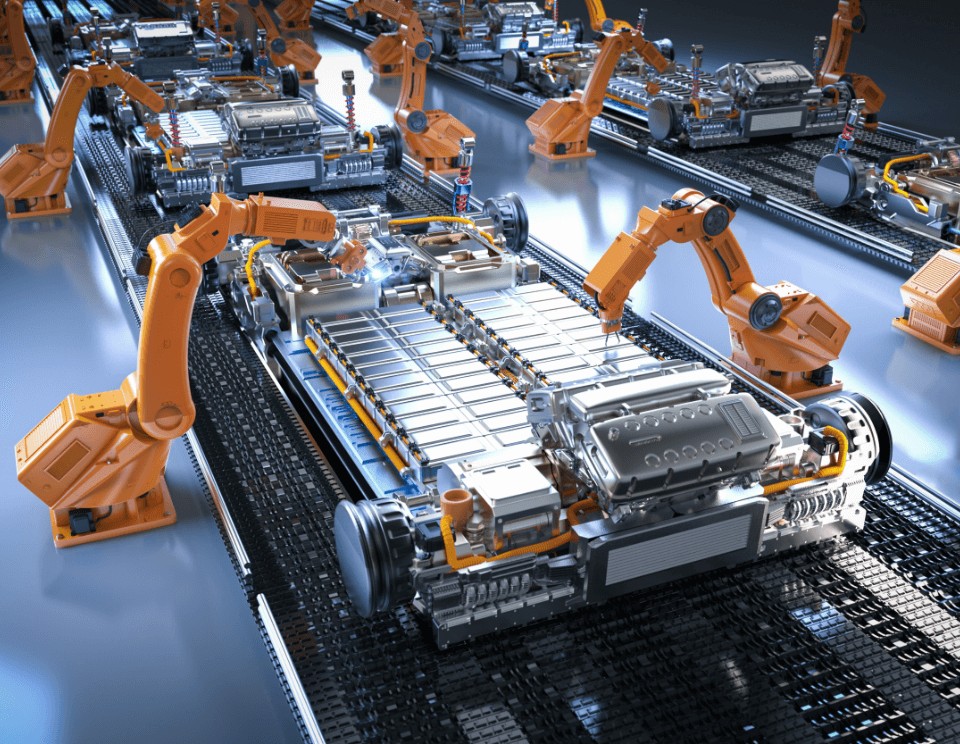
Looking Beyond the Initial Equipment Price
A lower quotation does not necessarily represent a lower manufacturing investment. Two production systems may perform a similar task but differ substantially in maintenance access, component replacement, programming requirements, production flexibility, and expansion options. Those differences may have little impact during procurement negotiations yet become financially significant several years into operation.
A more useful calculation considers the total cost of ownership. Purchase price, installation, commissioning, spare parts, labor, utilities, maintenance intervals, and production interruptions all belong in the discussion. Manufacturing automation can affect several of these categories simultaneously, although the actual financial outcome depends heavily on system architecture, workload, process design, and operating conditions.
Where Automation Can Influence Operating Expenses
Labor is often the most visible area associated with automation, but it is far from the only consideration. Automated feeding, transfer, assembly, inspection, and testing can reduce the amount of repetitive manual handling required at certain stations. The resulting financial effect depends on staffing arrangements and production volume, so the calculation should be based on the actual factory rather than a generalized labor-saving assumption.
Maintenance presents another important variable. Equipment with a complicated mechanical transport structure may require more replacement parts and maintenance work than a system designed around fewer friction-producing components. In lithium battery production, where lines can contain many stations and operate for extended periods, even relatively small maintenance differences can accumulate into meaningful operating costs.
At FHS, we approach industrial automation solutions by considering the relationship between equipment performance and the broader production line. Our new-energy automation business covers power batteries, energy-storage products, motors, and electronic control products, while our project work also incorporates production equipment and quality-control functions. (ksfhs.com)
Flexibility Can Protect Future Investment
Product changes create a different kind of cost. A production line built around one fixed configuration may work efficiently for its original product but require substantial engineering changes once dimensions, process sequences, or output requirements shift. Rebuilding stations or replacing transport equipment can make an apparently inexpensive initial investment much less attractive over time.
Flexible architectures can change this calculation. Modular equipment, configurable workstations, software-based scheduling, adjustable tooling, and independently controlled transport can give manufacturers more options when production requirements evolve. Such flexibility does not automatically produce savings; its value comes from reducing the amount of physical redesign needed for foreseeable changes.
The FTS-MT is one example from our portfolio that illustrates this design philosophy. It supports typical loads up to 40 kg, repetitive positioning accuracy of ±0.01 mm, a maximum speed of 5 m/s, and up to 255 movers and 255 modules. Its modular architecture and support for communication interfaces such as EtherCAT, PROFINET, and Modbus/TCP are intended to accommodate different production configurations. (ksfhs.com)
Production Data Changes the Cost Equation
Automation also influences procurement economics through information. If equipment can collect process data, record test outcomes, and associate production events with individual products, manufacturers gain more visibility into recurring problems. That visibility can help technical teams investigate abnormal conditions and identify where resources are being consumed.
Data integration is particularly useful when multiple production stations interact. A delay at one point can affect downstream utilization, while repeated quality deviations may indicate a process issue rather than an isolated defective component. Connecting equipment information with manufacturing systems gives engineers a broader view of these relationships and provides a stronger basis for operational decisions.
For manufacturing automation, software should therefore be considered part of the investment rather than an optional layer added after mechanical equipment has been selected. FHS's flexible transport systems use iFTS-Studio for configuration and debugging, with functions that include graphical scenario creation, monitoring, simulation, and multi-terminal debugging. These capabilities can influence commissioning and engineering work, areas that are sometimes overlooked in procurement calculations. (ksfhs.com)
Building a Long-Term Procurement Model
A sound procurement model should turn these factors into numbers. The calculation can include equipment investment, installation, training, maintenance, spare parts, energy consumption, staffing, expected output, changeover losses, and estimated downtime. Different scenarios can then be compared instead of judging an automation project from its purchase price alone.
Risk should also be considered. A highly customized system may offer strong process alignment but require specialized support, while a standardized architecture may simplify maintenance but provide fewer options for unusual production requirements. Procurement, engineering, production, and maintenance teams can evaluate these trade-offs together before the equipment specification is finalized.
The most useful industrial automation solutions are therefore not necessarily the ones with the highest level of automation. Their value depends on whether the technology fits the process, supports realistic production targets, remains practical to maintain, and leaves sufficient room for future changes. At FHS, we use this broader perspective when developing smart manufacturing projects for new-energy applications, combining automation, digital technologies, flexible production, and quality-control considerations around the customer's manufacturing requirements. (ksfhs.com)
Measuring Value Across the Equipment Lifecycle
Procurement decisions become clearer once the factory is viewed as a long-term operating system rather than a collection of purchased machines. A system that costs less on day one can become expensive if it demands frequent intervention, occupies excessive space, struggles with product changes, or requires major reconstruction when production expands. Conversely, a higher initial investment may make economic sense when its architecture supports sustained utilization, manageable maintenance, adaptable production, and useful data connectivity.
That does not mean automation should automatically be treated as the cheaper option. Every project has different volumes, products, labor conditions, technical constraints, and financial priorities. The stronger approach is to quantify the costs that occur after installation and compare them with the operational value expected over several years. Manufacturing automation becomes financially compelling when the technology addresses those real production costs rather than simply replacing a manual task with a machine. At FHS, we believe that long-term procurement value starts with understanding the production process in detail and selecting technology according to that reality.

Public Relations Officer
Miss Zeng
 info@ksfhs.com