Technical Sharing
2026/09/21
What Enables Industrial Automation Manufacturers to Support Global Export Projects?
21
2026/09/
Cross-border delivery of high-volume industrial machinery demands more than shipping containers and overseas field technicians. Across sectors like EV battery assembly, medical devices, and power electronics, deploying complex assembly lines overseas presents intricate mechanical, regulatory, and electrical synchronization challenges. Modern factory teams requiring high-speed production turn to trusted industrial automation manufacturers capable of standardizing complex build architectures across international borders. Mastering local compliance frameworks while maintaining strict performance repeatability forms the backbone of international industrial expansion.
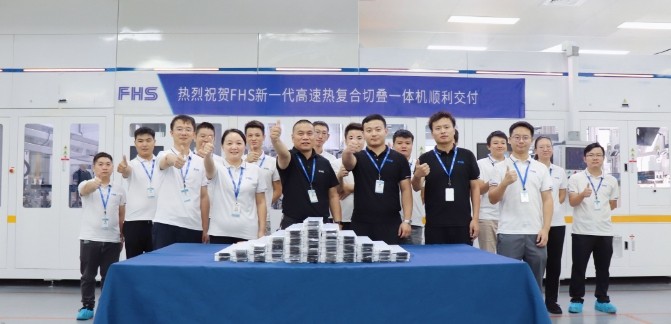
Navigating Multilateral Regulatory Compliance and Electrical Directives
Harmonizing machinery design against regional regulatory benchmarks remains a crucial prerequisite before shipping capital-intensive lines internationally. North American UL/NFPA standards dictate specific enclosure grounding, wire color coding, and arc-flash boundaries that diverge noticeably from European CE or Machinery Directive mandates. Designing dual-compliant electrical cabinets upfront prevents costly field retrofits during final site acceptance testing.
Engineering teams must systematically evaluate localized safety protocols, such as SIL (Safety Integrity Level) ratings and ISO safety circuit redundancies. Power grids across Asia, Europe, and North America operate at differing line voltages and frequencies, necessitating flexible transformer configurations and multi-voltage servo systems. By integrating modular, internationally certified control components from the early design phase, equipment builders streamline factory acceptance testing across disparate regional jurisdictions.
Modular Architectural Design for Long-Distance Logistics
Transporting multi-station production systems thousands of miles demands structural designs that withstand transit vibrations without losing fine mechanical alignments. Subdividing heavy steel frames into self-contained, pin-located modular sub-assemblies allows technicians to decouple and pack equipment into standard ocean containers or freight aircraft efficiently. Heavy structural bases utilize precision-machined reference points, enabling rapid re-assembly on site without tedious re-calibration.
Quick-disconnect wiring manifolds and centralized fieldbus junction boxes minimize manual re-wiring mistakes during re-installation. Internal components stay protected against maritime humidity through vacuum packaging, desiccant barriers, and active corrosion inhibitors. Structuring production hardware around standardized transport dimensions lowers shipping risks while dramatically shortening on-site mechanical assembly timelines.
Digital Twin Simulation and Factory Acceptance Protocols
Simulating full assembly cycles within a virtual software environment before physically cutting metal reduces costly engineering changes later in the build. Virtual commissioning bridges physical hardware design and PLC code development, letting software developers run logic stress tests in parallel with mechanical fabrication. Identifying sensor timing bottlenecks or mechanical collisions virtually ensures a smoother ramp-up phase when equipment reaches the customer's factory floor.
Comprehensive pre-shipment validation, commonly called Factory Acceptance Testing (FAT), verifies every operational metric before crate closure. Customer engineering leads evaluate high-speed cycling, error recovery routines, and cycle-time benchmarks under conditions that mirror actual factory settings. At FHS, our application engineers run full-turnkey stress tests prior to export clearance, reducing commissioning delays in overseas manufacturing plants.
Scalable Hardware for Next-Generation Sector Requirements
Scaling overseas operations within fast-moving markets like e-mobility or medical devices requires modular hardware capable of handling rapid product iterations. Assembly lines equipped with smart magnetic drive transport mechanisms allow plant operators to alter carrier routing without redesigning fixed mechanical conveyors. Flexible transport architectures optimize station dwell times dynamically, accommodating multiple product variants on a single physical line.
Integrating specialized equipment such as the FHS Flexible Transport System provides high-speed positioning accuracy alongside cleanroom compatibility required by demanding medical and battery production standards. These frictionless conveyance platforms rely on direct magnetic drive modules, significantly reducing particle wear compared to conventional belt or roller setups. Utilizing adaptable handling hardware allows global manufacturers to expand throughput seamlessly as market demands evolve.
Remote Diagnostics and Distributed Control Architectures
Ensuring operational uptime across time zones requires continuous telemetry visibility and secure remote access protocols. Modern machinery control systems isolate machine networks behind hardware VPN gateways, allowing off-site software engineers to monitor PLC registers, camera feeds, and servo drives safely. Real-time diagnostic software isolates mechanical anomalies down to the specific sensor or actuator level, speeding up troubleshooting efforts across continents.
Standardizing control code libraries across global installations simplifies ongoing software maintenance. When engineering teams deploy updates or optimize motion profiles on one line, those dynamic improvements apply across identical sites worldwide. Distributed I/O architectures keep sensor cabling localized near stations, reducing wiring complexity and facilitating fast replacement of wearable parts by local maintenance crews.
Building Distributed Field Support Networks
Physical proximity to client facilities remains indispensable, regardless of how advanced virtual diagnostic tools become. Establishing regional service hubs equipped with certified spare parts inventories mitigates supply chain disruptions and minimizes unplanned downtime. Training field engineers locally ensures rapid response times for physical component replacements, mechanical recalibrations, or unexpected operator issues.
Knowledge transfer during Site Acceptance Testing (SAT) empowers client operations teams to manage daily operation independently. Comprehensive training modules cover preventative maintenance schedules, vision calibration steps, and standard safety audits. Developing local technical talent builds long-term operational resilience, cementing strong relationships between equipment suppliers and international manufacturing teams.
Strategic Frameworks for Long-Term International Success
Achieving repeatable production quality across global manufacturing sites demands seamless cohesion between mechanical engineering, digital tools, and local service networks. Combining modular hardware platforms with intelligent software frameworks empowers international enterprises to scale production cleanly across continents. Modern engineering teams rely on versatile industrial automation solutions to keep complex, multi-site operations running smoothly without sacrificing output speed or dimensional precision.
Investing in robust export-ready manufacturing platforms provides companies a distinct advantage when expanding their global production footprints. Partnering with experienced equipment builders provides the technical bridge needed to translate ambitious factory designs into high-yielding, compliant production lines anywhere in the world. Modern high-volume manufacturing ultimately thrives on standardizing precision across borders.

Public Relations Officer
Miss Zeng
 info@ksfhs.com