Technical Sharing
2026/09/21
Can Automated Welding Make Battery Production More Consistent?
21
2026/09/
Consistency in battery manufacturing is rarely determined by a single welding parameter. Material condition, joint geometry, positioning accuracy, laser behavior, inspection methods, and process timing can all influence the final connection. A production team may therefore see differences between shifts even though operators follow the same instructions. Properly designed manufacturing automation technology can reduce this variability by turning critical welding steps into controlled, repeatable processes, while data and inspection systems provide additional visibility into what happens on the line. From our experience at FHS, the question is less about removing human involvement altogether and more about creating a production environment in which important process conditions remain stable from one shift to another.
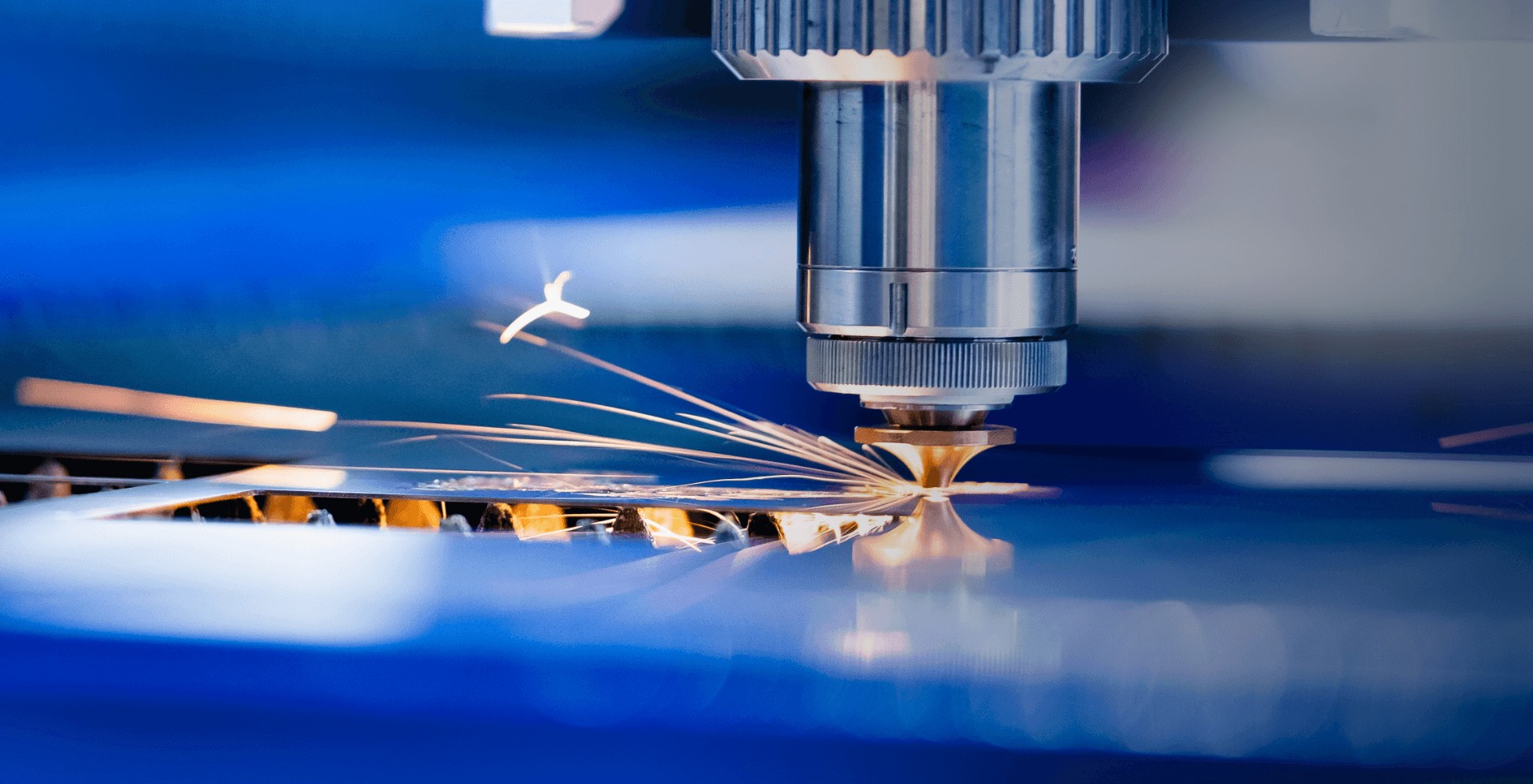
Why Welding Consistency Changes Between Shifts
A welding process can be sensitive to relatively small changes. The position of a workpiece, surface condition, clamping force, laser focus, material thickness, and energy input may all affect the resulting joint. Even a well-trained operator can respond differently to subtle variations in equipment condition or incoming materials, especially during long production runs.
This becomes more significant in battery manufacturing because many components have strict dimensional and electrical requirements. Busbars, current collectors, top caps, and other conductive parts must be joined without creating unacceptable defects or excessive thermal influence. A production line therefore needs more than a welding machine; it needs a controlled relationship between feeding, positioning, welding, inspection, and product identification.
The shift from manual adjustment toward manufacturing automation solutions can address part of this challenge. Automated fixtures and programmed welding parameters reduce the number of variables that depend directly on operator judgment, while sensors and vision systems can provide information before or after the weld. The resulting process is easier to monitor because important conditions can be linked to defined production parameters.
Data Helps Explain Differences Across Shifts
Shift-to-shift consistency becomes easier to investigate when production data is attached to individual products. A traceability system can associate a battery or component with its barcode, process route, inspection result, and relevant equipment information. Instead of asking only whether a defect occurred, engineers can examine where and under what conditions it appeared.
This distinction matters during troubleshooting. Suppose the first shift produces an unusually high number of rejected welds while the second shift returns to normal levels. Without historical information, the team may have to rely on operator recollection. With suitable data, engineers can compare process records, equipment states, inspection results, and production batches to identify differences that might otherwise remain hidden.
At FHS, we consider this type of information flow when developing automated production equipment. Our smart manufacturing technology includes MES software development, vision software development, virtual simulation and debugging, digital twin technology, and standardized electrical design. These capabilities can support the connection between equipment-level processes and broader production information rather than treating welding as an isolated workstation.
A Real Example of Integrated Battery Production
The economic value of consistency becomes clearer when welding is viewed as one part of a larger battery process. A prismatic battery line, for instance, may include cell preparation, barcode scanning, stacking, assembly, welding, inspection, testing, and material transfer. A deviation introduced at one station can affect several subsequent operations, so stable synchronization is important throughout the route.
One FHS application for prismatic battery module production combines busbar welding with post-weld visual inspection, EOL testing, barcode processes, and other assembly operations. The published module-pack solution describes a production line with a 20 PPM production capacity and a 30 JPH whole-line takt, while the process route incorporates welding and post-weld inspection within the broader automated workflow.
The significance is not simply that more operations are automated. Integration allows the production team to treat welding results as part of a connected quality process. A workpiece can move through defined stations while its identity and inspection information remain associated with the production sequence, giving engineers more context when a problem appears.
Designing Automation Around the Production Reality
Consistency targets should be established before selecting welding equipment. Engineers need to examine material characteristics, joint design, production volume, required takt time, allowable variation, inspection requirements, product changeovers, and available floor space. These factors influence whether a particular laser process, fixture arrangement, vision system, or transport method is suitable.
Production flexibility also deserves attention. Battery products can change in dimensions and configuration, so equipment that works well for one model may require adjustment when another variant enters production. A modular transport or tooling architecture can make such changes more manageable. FHS's FTS-MT, for example, provides a repetitive positioning accuracy of ±0.01 mm, a typical load of up to 40 kg, and a maximum speed of 5 m/s, with modular expansion and multiple communication interfaces. It is one example of how precise material positioning can support automated processes around welding rather than replacing the welding technology itself.
A well-planned system also considers maintenance and process recovery. Production personnel need to know how a station behaves after a fault, how parameters are restored, and how affected products are identified. These practical details have a direct relationship with consistency because an uncontrolled restart can introduce a new source of variation even when the original fault has been resolved.
Consistency Comes From the Whole Process
A repeatable weld is only one part of a consistent manufacturing result. The quality of the incoming component, its position, the stability of the welding process, inspection logic, data traceability, and downstream handling all contribute to what finally reaches the customer. Automation can make these relationships more controlled, but its effectiveness depends on how thoughtfully the individual technologies are connected.
For us at FHS, manufacturing automation solutions are most useful when they address the complete production context rather than focusing on a single machine. Laser welding, vision inspection, material handling, testing, control systems, and production data each have a distinct role, and their value increases when those roles fit together logically. With that foundation, manufacturers have a more practical way to compare production shifts, investigate deviations, and maintain a consistent process as product requirements evolve.

Public Relations Officer
Miss Zeng
 info@ksfhs.com