Technical Sharing
2026/09/21
How Integrated Automation Shapes a Modern Production Line?
21
2026/09/
A production line rarely depends on one type of machine or one control method. A sensor may detect a workpiece, a PLC may interpret the signal, a motor drive may adjust movement, and a motion controller may coordinate several axes within milliseconds. Once these elements interact, the behavior of the line changes considerably. This is where manufacturing automation technology becomes more than a collection of individual devices: it becomes an interconnected control architecture. At FHS, we see this relationship particularly clearly in smart manufacturing projects, where production speed, positioning, material handling, and process stability have to work within the same operating environment.
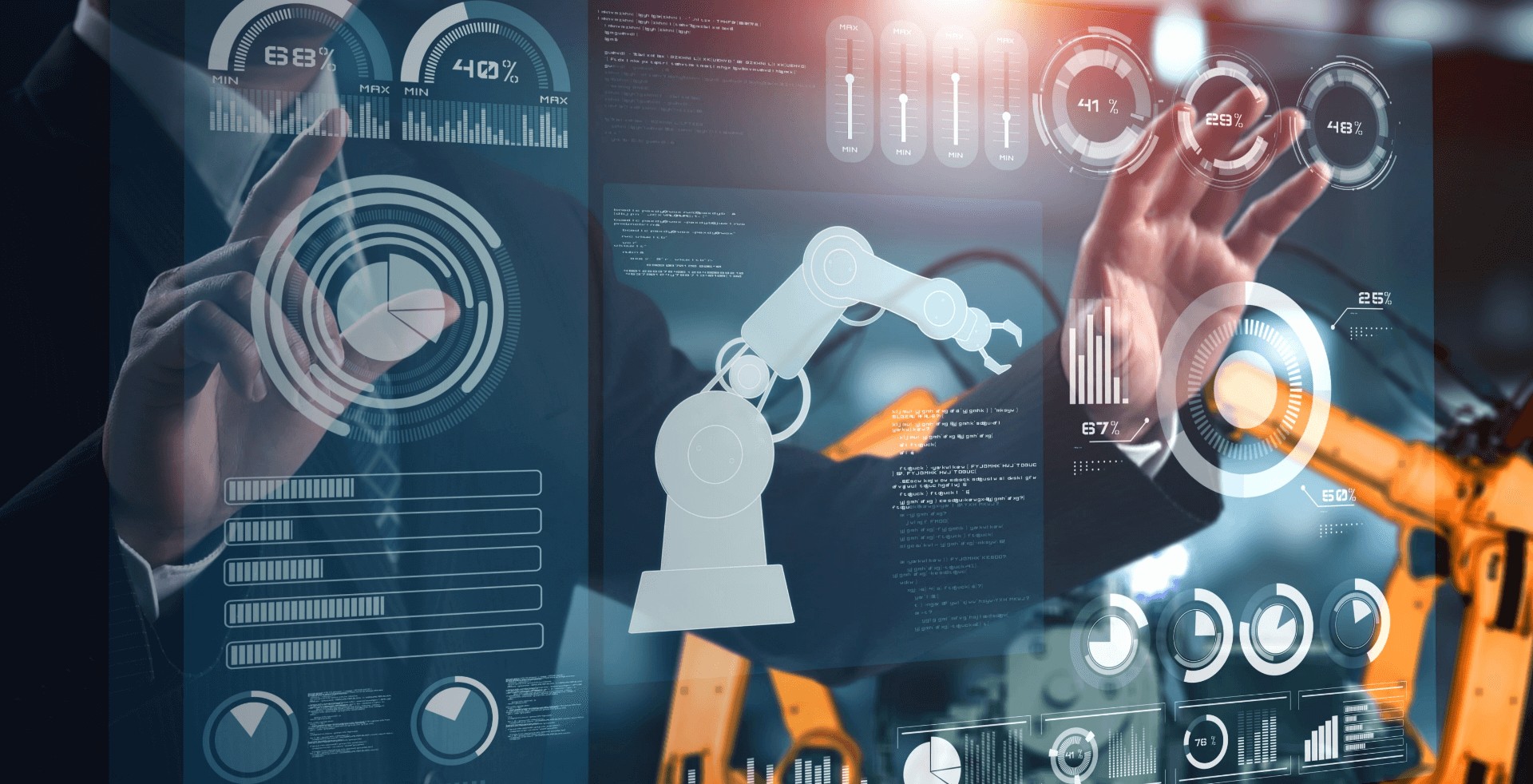
How Control Layers Share Responsibility
The PLC usually sits close to the machine-level process. It receives signals from sensors, evaluates operating conditions, controls actuators, and executes predefined logic. A central control system can operate at a broader level by coordinating several stations or production modules, while higher-level software may collect production information for monitoring and analysis.
That division of responsibility matters because a production line can become difficult to troubleshoot if every function is concentrated in one controller. Separating supervisory control, machine logic, motor control, and motion functions allows engineers to identify problems more precisely. A communication fault, for instance, should not necessarily require changes to the motion program itself.
Our approach at FHS reflects this layered structure. We work with central control systems and PLC control systems for smart production lines, together with motor drive, motion-control, and roll-to-roll tension-control technologies. These technologies address different parts of the production process while allowing the overall system to be designed around the actual manufacturing requirements.
Tension Control Adds Another Dimension
Some production processes introduce an additional challenge: the material itself is continuously moving and its tension must remain within an appropriate range. Roll-to-roll manufacturing is a good example. Materials such as films, foils, paper-like substrates, or other flexible webs can stretch, loosen, or shift if tension is not properly managed.
In such systems, motor speed and torque cannot be considered separately from material behavior. A change in winding diameter may alter the required torque, while acceleration or deceleration can temporarily affect web tension. Sensors and control algorithms therefore need to respond to changing conditions rather than relying on one fixed motor setting throughout the process.
FHS includes roll-to-roll tension control among its control-technology capabilities. Within a broader production architecture, this type of function can interact with PLC logic, motor drives, and motion control so that material handling remains synchronized with upstream and downstream operations. The important point is that tension regulation becomes part of the production sequence rather than an isolated motor-control task.
Why Integration Affects Production Performance
Combining several control technologies can improve coordination, but integration also introduces engineering challenges. More devices mean more communication paths, parameters, control relationships, and potential failure points. Without a clear architecture, adding technology can create complexity instead of solving it.
A practical system therefore begins with process requirements. Engineers can map the production sequence, identify which decisions must occur locally, determine which information needs to reach the central controller, and define the timing requirements between stations. Only after those relationships are understood does it become easier to decide which combination of automation technologies makes sense.
This process-oriented method is especially relevant to high-volume industries such as battery and automotive manufacturing. A production line may contain feeding systems, assembly equipment, inspection stations, transport mechanisms, and testing units, each with different control requirements. Their performance cannot be evaluated independently because a delay or control deviation at one point can influence several downstream operations.
Building an Architecture That Can Evolve
Production requirements rarely remain unchanged throughout the life of a factory. New product variants, revised process parameters, higher output targets, or additional inspection steps may require modifications to the original automation architecture. A system that is difficult to expand can turn relatively small production changes into substantial engineering projects.
Modularity can provide more room for adaptation. Clearly separated control functions, standardized communication interfaces, configurable software, and well-defined machine boundaries make it easier to modify individual sections without redesigning the entire line. This does not mean every system should use the same architecture; rather, the structure should reflect the scale and complexity of the process.
At FHS, we consider these factors when developing smart manufacturing projects across industries such as new energy, automotive components, and medical devices. Our control technology portfolio covers central control, PLC control, motor drives, motion control, and roll-to-roll tension control, giving us different technical layers to work with according to the production application. The final architecture depends on process characteristics rather than simply adding every available technology.
Integration Is the Real Automation Challenge
A sophisticated production line is not defined by how many controllers, drives, sensors, or software platforms it contains. Its effectiveness depends on whether those elements understand their respective roles and exchange the right information at the right moment. Once control logic, motion, material handling, and process data are coordinated, individual machines can function as parts of a much more coherent manufacturing system.
That perspective also changes how engineers evaluate manufacturing automation technology. Instead of asking which single device can perform a task, the more useful question is how each control layer contributes to the complete production sequence. At FHS, we approach these projects by connecting different control capabilities with the requirements of the process, allowing the resulting system to balance precision, responsiveness, flexibility, and practical engineering considerations.

Public Relations Officer
Miss Zeng
 info@ksfhs.com