Technical Sharing
2026/09/21
What Does Manufacturing Automation Involve in a Modern Factory?
21
2026/09/
A modern production line is no longer defined simply by machines repeating the same physical motion. It is a coordinated environment in which material handling, process control, inspection, data collection, and equipment communication have to work together. From our perspective at FHS, the practical meaning of industrial automation solutions becomes clearer when we look beyond individual machines and examine how an entire production process is organized. Automation can influence how products move between stations, how process parameters are controlled, how defects are identified, and how production information is connected across different stages.
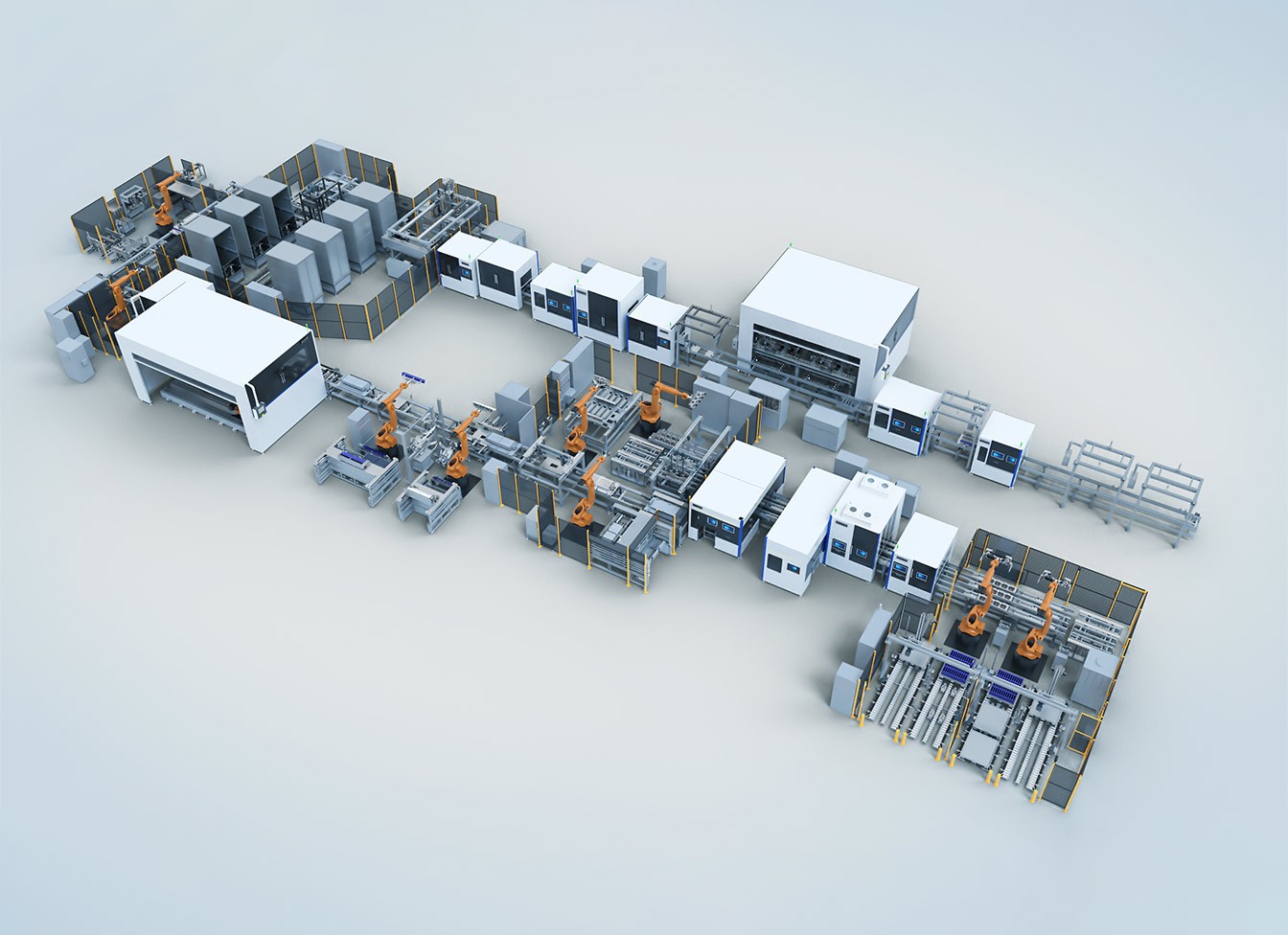
From Individual Machines to Connected Production
Traditional factory automation often begins with a specific task: feeding a component, fastening a part, dispensing material, welding two pieces, or checking a finished product. Those functions remain important, but modern factories usually require much more than isolated mechanical actions. A production line may contain robots, sensors, controllers, inspection equipment, conveyors, databases, and manufacturing execution systems, all of which need to exchange information with reasonable consistency.
The real value of automation therefore comes from coordination. A machine that performs its own task quickly may still create a bottleneck if upstream material arrives too slowly or downstream inspection cannot keep pace. Manufacturing automation connects these individual operations into a broader workflow, allowing engineers to consider takt time, material flow, workstation utilization, traceability, and product variation as parts of the same production problem.
This broader perspective also changes how factories are designed. Instead of treating transport as a passive step between processing stations, engineers can make movement part of the control strategy. Product carriers can be routed according to process requirements, while production data can be associated with individual workpieces. Such arrangements are particularly useful when manufacturers need several product variants to share equipment without redesigning the entire line.
Material Movement as Part of the Process
Material handling is sometimes overlooked because it does not directly change the physical characteristics of a product. Yet every transfer consumes time, occupies space, and affects the synchronization between stations. Conventional conveyors generally move products according to a predefined sequence, which can make process changes more difficult when production requirements become more varied.
A more flexible transport architecture gives each carrier greater independence. Instead of treating an entire conveyor as one continuous movement system, manufacturers can coordinate individual movers according to workstation conditions, product status, and routing requirements. This approach is particularly relevant to battery, automotive, medical-device, and electronics production, where different operations may require different dwell times or inspection paths. FHS's flexible transport portfolio uses linear-motor technology to independently control movers and supports straight, loop, and diverging layouts.
For example, the FTS-MT is designed for small- and medium-load applications and lists a typical load of up to 40 kg, repetitive positioning accuracy of ±0.01 mm, a maximum speed of 5 m/s, and DC 48V power supply. Its configuration environment, iFTS-Studio, supports system setup, monitoring, simulation, and debugging, while the platform supports communication interfaces including EtherCAT, Modbus/TCP, PROFINET, CC-Link, CANopen, and POWERLINK.
Control, Sensing, and Quality Checks
Automation becomes substantially more useful when machines can respond to what is actually happening on the line rather than simply following a fixed sequence. Sensors can identify position, presence, force, temperature, pressure, or other process conditions, while controllers interpret those signals and trigger the appropriate action. Inspection equipment adds another layer by determining whether a workpiece meets defined process or quality criteria.
This relationship between sensing and control is central to reliable production. Suppose an inspection station detects a product that does not meet a predefined condition. The system may need to record its status, redirect it, prevent it from entering a subsequent process, and preserve the associated production information. Such logic reduces the dependence on manual intervention and makes quality information more closely connected to the actual manufacturing process.
At FHS, we also approach automation from the perspective of process integration. Our smart manufacturing business covers new-energy, automotive, and medical-device applications, with capabilities involving assembly, testing, digital technologies, and flexible production. Medical automation projects, for instance, can incorporate leak, flow, high-precision torque, and electrical testing within integrated production lines.
Data Gives Automation Greater Visibility
A factory can contain highly automated equipment and still have limited visibility if production information remains isolated within individual machines. Data provides the connection between physical operations and management decisions. Parameters, test results, equipment status, product identification, and process history can be collected and associated with specific production stages.
This is where industrial automation solutions extend beyond mechanical automation. The objective is not simply to make equipment move automatically; it is to create a production environment in which relevant information can support troubleshooting, traceability, maintenance, and process improvement. A manufacturing team can then investigate recurring deviations using actual process records instead of relying entirely on manual observations.
Software also plays a practical role in this architecture. FHS's iFTS-Studio, for example, provides graphical configuration and debugging functions for flexible transport systems, together with real-time monitoring, waveform display, parameter writing, and system simulation. It also supports parallel debugging and can update mover information without requiring the entire system to stop.
Building a More Practical Automation Strategy
A successful automation project usually starts with the production process rather than with a particular machine. Engineers need to understand cycle time, product characteristics, workstation sequence, material flow, inspection requirements, available floor space, communication architecture, maintenance expectations, and future product changes. These factors determine whether a conventional conveyor, robotic cell, flexible transport system, or combination of technologies is appropriate.
From our experience at FHS, manufacturing automation works best when mechanical equipment, controls, software, inspection, and production data are considered as interconnected elements. A technically capable machine can still perform poorly if its interfaces do not fit the surrounding line. Conversely, a carefully designed system can create smoother material flow and clearer production visibility without relying on unnecessary complexity.
The same principle applies to investment decisions. Engineers and production managers should compare more than initial equipment cost. Changeover requirements, maintenance access, integration effort, available production space, data connectivity, future expansion, and the consequences of process interruptions can all influence the long-term practicality of an automation architecture.
A Broader View of Smart Factory Development
Automation is ultimately about how a factory organizes work. Mechanical actions, transport, sensing, inspection, software, and data each perform different functions, yet their interaction determines the behavior of the production system as a whole. Looking at those connections makes it easier to distinguish meaningful automation from simply replacing a manual task with a machine.
For manufacturers planning a new line or upgrading an existing one, the most useful starting point may therefore be the production workflow itself. Once material movement, process requirements, quality checkpoints, information flow, and future product changes are clearly mapped, the right technology becomes easier to evaluate. At FHS, we use this process-oriented perspective across new-energy, automotive, and medical automation projects, combining flexible production technologies with application-specific equipment and digital capabilities.

Public Relations Officer
Miss Zeng
 info@ksfhs.com