Technical Sharing
2026/09/21
How Medical Device Assembly Automation Improves Precision in Micro-Component Manufacturing
21
2026/09/
Micro-scale healthcare components—such as drug delivery catheters, implantable sensors, and delicate surgical valves—demand spatial positioning metrics that far exceed standard manufacturing tolerances. Manual handling of these miniature parts frequently leads to component deformation, particulate contamination, and subtle assembly misalignment. Implementing specialized medical device assembly automation allows factory teams to bypass human physical limitations, establishing consistent micron-level positioning during rapid production runs.
Kinematic Precision in Micro-Scale Component Handling
Handling sub-millimeter components requires motion control systems capable of executing minute rotational and linear steps without overshoot. Multi-axis direct-drive mechanisms remove the back-lash and hysteresis inherent in traditional gear trains, granting mechanical arms sub-micron repeatability. Soft-touch end effectors equipped with delicate force feedback prevent fragile polymer housings from warping during high-speed insertion steps.
Vacuum-assisted gripping channels must balance suction pressures carefully so micro-molded parts remain undamaged during high-speed transit. Closed-loop force sensors measure resistance dynamically during joining operations, stopping forward motion instantly if alignment drifts beyond tight tolerance bands. Replacing rigid mechanical linkages with adaptable force-controlled actuators keeps micro-assembly yields steady across long production cycles.
High-Resolution Optical Guidance and Micro-Feature Recognition
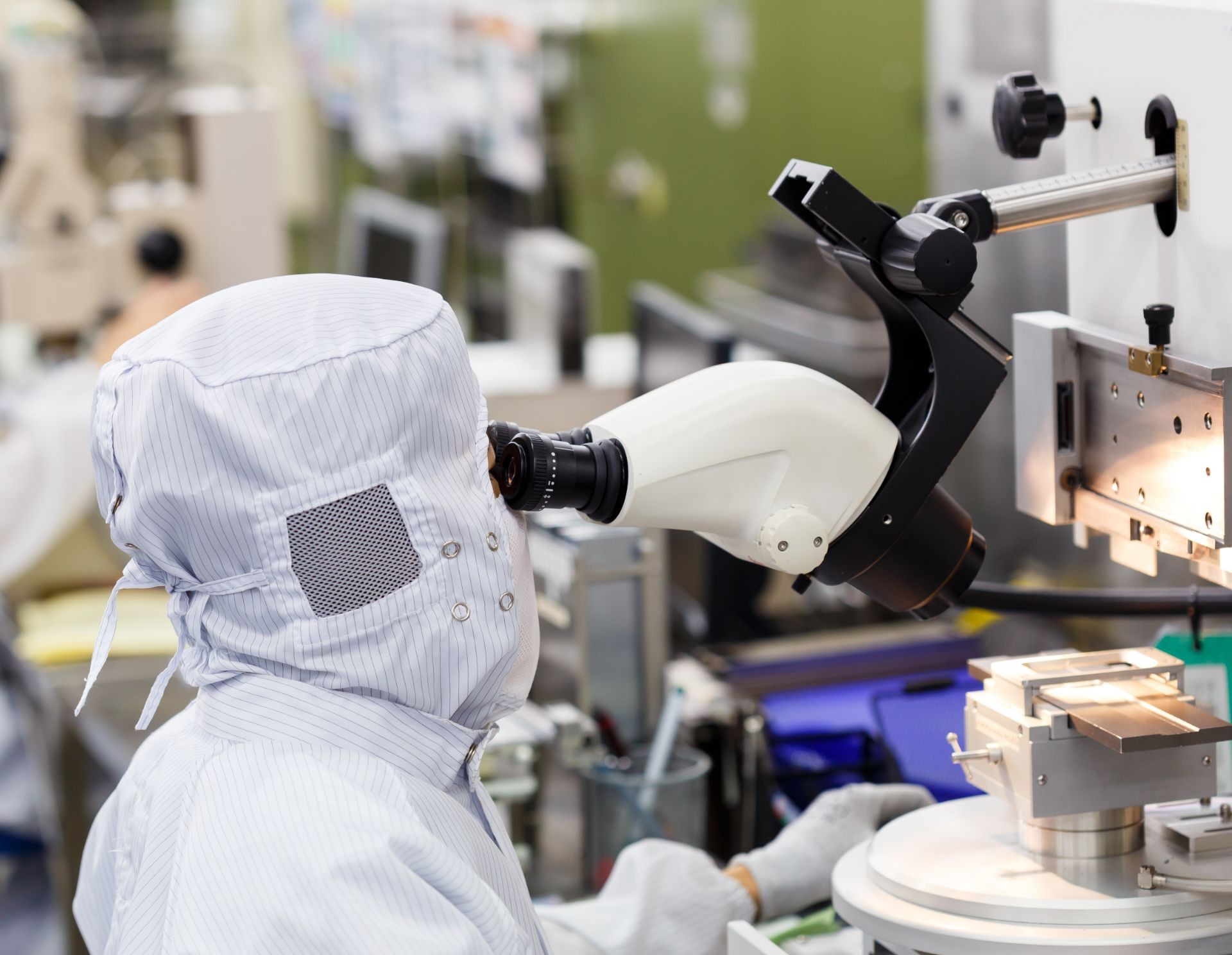
Standard mechanical fixtures often struggle to register micro-scale feature orientation accurately on small plastic housings. High-resolution vision cameras coupled with telecentric optics scan part geometries in real time, identifying microscopic fiducials and edge boundaries under polarized lighting. Image processing algorithms calculate offset coordinates in milliseconds, transmitting path corrections to picking actuators before physical contact occurs.
Multi-angle camera arrays evaluate sub-assemblies continuously, detecting flash, micro-cracks, or dust particles prior to final mating steps. Aligning parts optically rather than mechanically protects delicate surfaces from abrasion and scratches. Deploying advanced vision technology reduces mechanical wear on tooling fixtures while stabilizing overall placement accuracy.
Controlled Environment Compliance and Cleanroom Kinematics
Intricate healthcare devices usually require strict particulate control to satisfy international medical device cleanroom standards (such as ISO Class 5 or Class 7). Moving parts inside automated cells generate micro-particles through friction, which can deposit onto sterile fluid paths or optical windows. Specialized cleanroom-rated motion platforms feature enclosed linear motors, anodized structural frames, and active localized vacuum exhaust ports to pull wear particles away from open workpieces.
Material selection within the processing space must resist aggressive chemical breakdown caused by frequent hydrogen peroxide vapor or isopropyl alcohol decontamination cycles. Stainless steel enclosures with smooth, rounded contours eliminate stagnant zones where airborne spores or dust might accumulate. Designing kinematic systems specifically for sterile environments prevents bio-burden contamination without compromising high-speed mechanical performance. Our engineering group at FHS designs these specialized platforms to maintain strict structural integrity across complex medical manufacturing workflows.
Specialized Workstations for Precision Dosing and Dispensing
Sub-nanoliter fluid dispensing represents a critical challenge when manufacturing wearable drug delivery systems or diagnostic test cartridges. Pneumatic dispensing systems often suffer from volume variance caused by thermal viscosity changes in reagents or adhesives. Positive-displacement micro-piston pumps and high-frequency piezo-electric jetting valves deliver exact fluid volumes regardless of fluid temperature shifts.
In-line weight sensors verify micro-dosing volumes dynamically through ultra-precise gravimetric or optical droplet measurements. Integrating the Automation Solutions for Medical Equipment platform allows production cells to execute fluid filling, component mating, and real-time seal inspection within a synchronized enclosure. Controlling fluid viscosity and dispense speed dynamically prevents adhesive bleed that could block micro-fluidic channels.
In-Line Verification and Non-Destructive Quality Checkpoints
Inspecting finished micro-assemblies after cell discharge risks passing latent defects downstream, resulting in costly batch recalls. High-speed multi-sensor inspection stations incorporate laser profilometers, ultrasonic transducers, and vision systems directly into active processing stations. Every single sub-assembly undergoes non-destructive evaluation to verify weld depth, fluid seal integrity, and dimensional clearance.
When an inline inspection sensor flags a defective unit, pneumatic reject gates push the item into an isolated audit hopper automatically. Centralized control software logs the failure mode alongside serial numbers, helping quality engineers identify tool degradation before full-line stops happen. Dynamic quality gates preserve output integrity while minimizing material scrap costs.
Data Synchronization and Complete Component Traceability
Regulatory compliance across global healthcare markets requires absolute end-to-end data tracking for every manufactured unit. Programmable logic controllers log detailed operational metrics—including press force curves, laser weld energy profiles, and dispensing pressures—for each individual device. Storing comprehensive digital records simplifies audit procedures and streamlines root-cause investigations if unexpected field issues emerge.
Digital twin software models physical line mechanics continuously, comparing real-time operational data against baseline calibration profiles. Factory supervisors utilize this telemetry to schedule preventative maintenance before mechanical wear influences dimensional accuracy. Connecting shopfloor equipment to centralized data networks establishes complete transparency across complex manufacturing runs.
Unifying Technical Capabilities for Future Medical Innovations
Scaling production for ultra-precise healthcare components depends on combining precise kinematic motion, adaptive optical guidance, and sterile-ready mechanical design. Advanced multi-axis handling systems eliminate manual variability, enabling factory teams to deliver intricate components with uncompromising consistency. Implementing a modern medical device assembly machine grants manufacturers the structural stability needed to meet demanding global regulatory standards.
At FHS, we work alongside global device manufacturers to develop flexible, high-yield assembly ecosystems tailored to complex product geometries. Integrating smart software management with robust mechanical hardware transforms intricate micro-assembly into an efficient, highly repeatable process. Sustainable growth in the medical manufacturing industry ultimately relies on merging continuous mechanical innovation with data-driven process control.

Public Relations Officer
Miss Zeng
 info@ksfhs.com