Technical Sharing
2026/09/21
How to Evaluate Battery Manufacturing Solutions for Modern Production?
21
2026/09/
There is no single formula for building a strong battery production line. Cell format, product architecture, output targets, quality requirements, factory layout, and future model changes all influence the equipment and control strategy that make sense. For manufacturers comparing battery manufacturing automation, the more useful question is not which system sounds most advanced, but which solution can coordinate production processes, maintain stable operation, support traceability, and adapt to changing requirements. From our experience at FHS, practical automation begins with understanding the production challenge before deciding which technologies belong on the line.
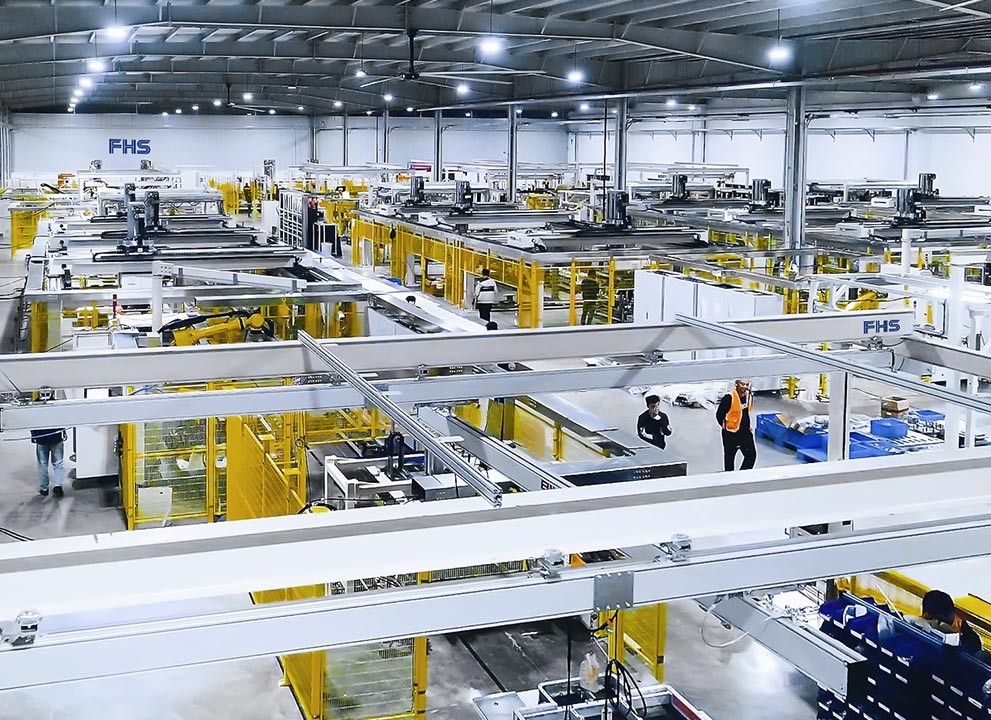
What a Practical Battery Production Solution Should Include
A battery line involves far more than the core assembly operation. Material feeding, positioning, welding, inspection, testing, transport, and data management all contribute to the finished product. A solution that performs one stage efficiently may still create difficulties if its interfaces with neighboring processes are poorly designed.
Equipment stability is another consideration that deserves attention during evaluation. Frequent interruptions can affect output, while difficult recovery procedures may increase the time required to return a line to normal operation. Manufacturers should therefore examine how equipment is controlled, monitored, maintained, and restarted rather than focusing solely on nominal production capacity.
For battery manufacturing, a suitable solution should also reflect the actual product roadmap. A line designed for one battery architecture may require significant modification when a new format enters production. Flexible equipment and standardized engineering elements can provide more room for adjustment without forcing manufacturers to redesign every part of the production system.
Flexibility Across Battery Formats
Battery technology continues to develop, and production lines need to accommodate different configurations. CTP structures, short-knife designs, and other battery architectures can create different requirements for assembly, transport, welding, inspection, and process control. A production solution should therefore be assessed according to the products it is expected to manufacture throughout its operating life.
FHS's new-energy production portfolio covers CTP1.0, CTP2.0, and CTP3.0, together with short-knife gap and gapless short-knife solutions. These configurations have been implemented in actual production projects with acceptance and delivery cases. The broader lesson is that flexibility needs to exist at the production-system level, not merely within one individual machine.
Changeover capability also deserves close examination. A flexible line is valuable only if product transitions can be carried out in a controlled and practical manner. Shorter average changeover times can help manufacturers respond to different production orders while limiting the disruption associated with switching between configurations.
Data and Traceability Strengthen Process Management
Production data provides another criterion for comparing automation solutions. A modern line can generate information from equipment status, process parameters, inspection results, and product identification. If these records remain disconnected, much of their practical value is lost. Integrated data architecture allows engineers and production managers to follow the history of individual products and examine process behavior across the line.
At FHS, we have developed a self-developed MES system that provides closed-loop monitoring and traceability throughout the production process and can integrate with a factory's existing MES. This creates a link between equipment-level activity and broader production management, allowing relevant process information to remain associated with the manufacturing route.
The importance of this capability becomes clearer during quality investigations. If a product fails an inspection, engineers can examine its process history rather than relying entirely on manual records. That information can help identify whether the issue is associated with material handling, equipment conditions, process parameters, or another stage of production.
Stability, Ramp-Up, and Production Capacity
A production solution should be evaluated under real operating conditions rather than only during initial commissioning. Early ramp-up can be challenging because equipment, processes, operators, and production management systems must begin working together. A line that reaches stable operation quickly can provide a different economic outcome from one that requires prolonged adjustment.
Capacity is also more than a number printed in a technical document. Actual throughput depends on takt time, equipment utilization, material availability, changeover frequency, inspection requirements, maintenance intervals, and the coordination between stations. Procurement teams should examine how these factors interact before using nominal capacity as the main comparison point.
Our approach at FHS places considerable attention on equipment stability and capacity ramp-up, supported by a structured quality-control system. Rather than treating these elements as separate concerns, we consider them within the wider production architecture so that equipment performance, process quality, and production management can work together.
Matching Technology to the Production Strategy
The best battery production solution is rarely defined by the largest equipment specification or the longest feature list. Its value comes from how well the system fits the product, factory, production volume, quality requirements, and future development plans. Stability matters because interruptions affect output; flexibility matters because products evolve; traceability matters because quality problems require evidence; and integration matters because isolated equipment cannot provide a complete view of the production process.
At FHS, we approach battery manufacturing with these factors in mind, combining production equipment, quality-control systems, flexible production capabilities, and MES-based process monitoring according to project requirements. Rather than applying one fixed formula to every factory, we work from the manufacturing process outward, using the actual production objectives to determine the appropriate automation architecture.

Public Relations Officer
Miss Zeng
 info@ksfhs.com