Company News
2025/12/16
Forging Quality in FHS Intelligent Equipment: From Process to Delivery
16
2025/12/
In the context of the global energy transition and the deep integration of intelligent manufacturing technologies, FHS has built a strong foothold in multiple sectors, including Energy Storage Systems (ESS), Maglev Transportation, automotive components, and medical applications. We actively address the strict demands of overseas markets regarding delivery standards and compliance. We understand that the delivery of every automated system is not merely about the product itself; it embodies our customers’ expectations for stability, improved efficiency, and market opportunity. That's why FHS provides more than just intelligent production lines; we offer essential support for our customers' business continuity and the long-term trust and value.
In the non-standard automation field, which involves high technical complexity, deep customization, and multi-project parallel execution, FHS recognizes that relying solely on FAT (Factory Acceptance Test) before shipment is a passive form of quality control. True quality excellence is not born from final inspection; rather, it is rooted in process assurance at every stage of the product's entire lifecycle. To this end, FHS has transformed the concept of "full-process quality management" into a practical and replicable management system—a process assurance system based on risk management.
"Process Quality" Dual Engines: Professional Control for Two Core Businesses
FHS has established specialized and refined quality management models for our two core businesses—Intelligent Automated Equipment and Maglev Systems—creating differentiated competitive advantages.
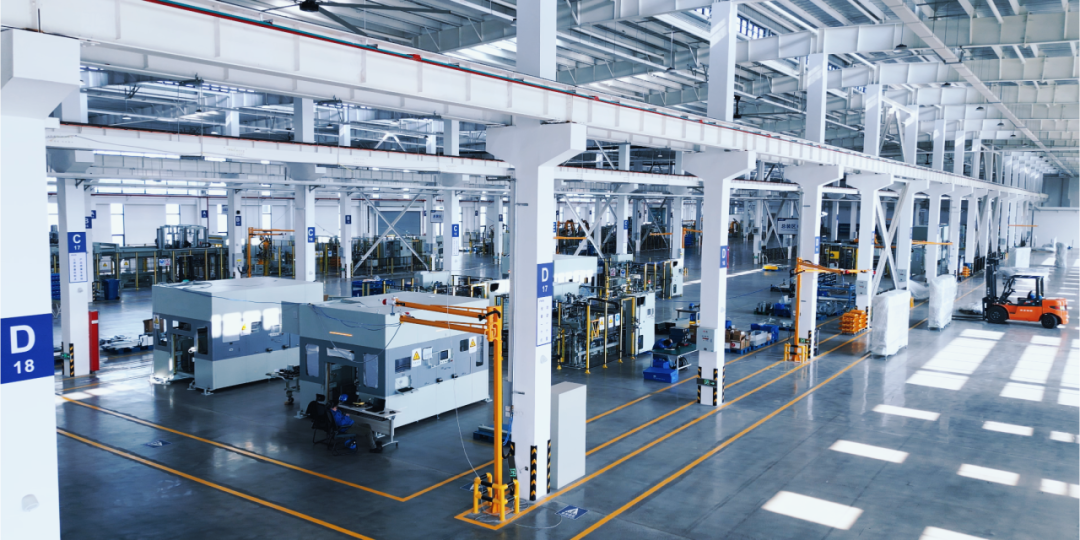
Engine 1: FAT Quality Assurance System Across the Entire Project Lifecycle
In the domain of non-standard intelligent equipment, project delivery is complex and highly customized. FHS has incorporated the VDA 6.7 standard from the German Automotive Industry Association, embedding quality management across the seven major project phases: from solution refinement, design review, and manufacturing assembly, through manual and automatic debugging, to full-line integrated commissioning and internal equipment self-acceptance.
Clear quality objectives and execution standards are set for each phase, forming a dual control mechanism of project milestones and FAT quality gates. This ensures management is proactive and goal-oriented:
l Risk Management: Applying FMEA (Failure Mode and Effects Analysis) thinking before the start of each phase to systematically identify risks in design, quality, supply chain, and schedule, and to formulate preventive strategies.
l Rigorous Validation: Conducting DFM (Design for Manufacturing) functional verification for key workstations, 100% dimensional inspection for tooling and fixtures, 100% simulation testing of core program modules, and ensuring system performance fully complies with the FAT acceptance protocol.
l Compliance Integration: Front-loading international certification requirements, such as CE and UL, into the design review phase, and translating customer technical agreements into specific process inspection specifications, ensuring that "delivery equals compliance."
l Clear Protocols: Strictly adhering to FAT rules, remaining result-oriented, and implementing quality requirements throughout the process via systematic management of deliverables at each stage.
Through the effective execution of the full-lifecycle FAT process management, FHS has achieved a FAT delivery quality success rate of over 97% in 2025.

Engine 2: The Maglev Product Quality Gate System Centered on APQP
As a strategic business, the FTS Intelligent Maglev Conveying System demands extremely high levels of equipment reliability. FHS utilizes APQP (Advanced Product Quality Planning) as the main framework. We integrate RAMS (Reliability, Availability, Maintainability, Safety) and DFx (Design for Manufacturing, Assembly, Cost, Service) evaluation tools into the crucial phases of key materials, core components, and system integration. This approach emphasizes risk pre-judgment and planning precedence, helping FTS achieve higher quality standards and ensuring the conveying system is reliable and durable.
l Process Standardization: Conducting RAMS analysis during the conceptual phase to define key indicators across the entire lifecycle.
l Tool-Based Assessment: Employing DFx reviews during the design phase to ensure the product meets fundamental requirements for manufacturability, assemblability, and maintainability.
l Data-Driven Decisions: Setting up Quality Gates (Q-Gate) in the R&D, procurement, assembly, and commissioning phases. These gates review the RAMS status and DFx execution at each stage, culminating in a final APQP evaluation score.
l Systematic Verification: Introducing fault injection testing during the integrated testing phase to strengthen system robustness and optimize design.
The implementation of APQP has garnered unanimous customer praise for the stability of our standardized Maglev products in terms of mechanical performance, control algorithms, and high-speed efficiency.
The Foundation of Process Quality: Everyone Involved, Everyone Accountable
At FHS, quality is not the sole responsibility of a single department but a process involving every employee. This embodies the philosophy that "every project, every cost, and every quality outcome is everyone’s responsibility.”
Every review, every drawing, every piece of material, every assembly station, every parameter, and every segment of the program directly impacts the final product quality. Through clear processes and a culture of accountability, we tightly link project success to the responsibilities of every team member. We empower all employees to be risk discoverers, problem preventers, solution solvers, and value creators. Consequently, quality awareness is no longer just a slogan but is embedded into the project processes and organizational habits.

Quality is our conviction. Delivery is our commitment.
Through years of practice, FHS has established a complete quality management capability platform—from philosophy and methodology to processes and tools—making delivery quality visible, manageable, and predictable. We deliver not just an automated production line, but a rigorous commitment spanning every single stage. This is the "reliable core" that safeguards our customers' intelligent manufacturing, and it perfectly reflects our corporate values: "Customer Orientation, Perseverance, Innovation, Values Sharing."
Born for Delivery, Trusted for Reliability.FHS—forging the solid quality of high-end intelligent manufacturing through process quality.

Public Relations Officer
Miss Zeng
 info@ksfhs.com