Company News
2026/09/01
FHS Group Holds Hands-On Problem-Solving Training for Managers: Tackling Real Business Challenges to Strengthen Management Capabilities
01
2026/09/
Problem-solving ability is a key measure of managerial maturity and a foundational capability that enables an organization to navigate change and achieve high-quality growth. Twenty-one managers from FHS Group’s business divisions brought real challenges from the front line of their operations to a two-day training program dedicated to problem solving. Working in three teams, they completed an end-to-end learning cycle—from methodology and hands-on analysis to concrete action plans.
This was not a conventional knowledge-transfer session, but an intensive management-development initiative. Using the PRIDE methodology as its framework and real Group challenges as its focus, the program encouraged managers to move beyond experience-based habits, build practical problem-solving skills, and become resilient leaders capable of taking ownership and breaking through obstacles.
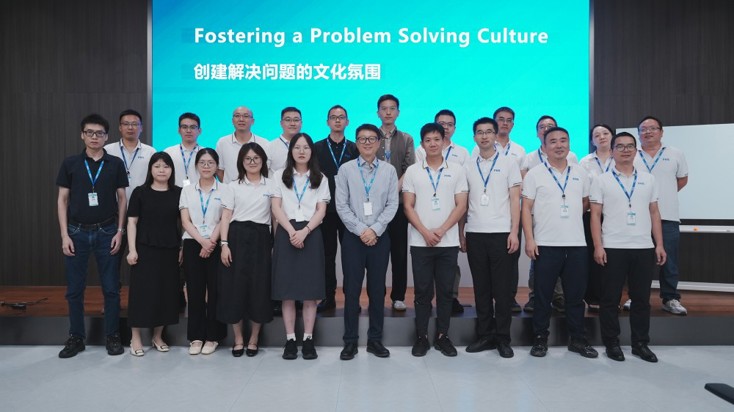
01 Problem Solving: A Core Priority in Management Capability Building
A manager’s core value lies in the ability to think clearly, analyze problems thoroughly, and turn decisions into effective action. Problem-solving capability, however, is developed not by listening alone, but through practice. In line with the Group’s talent development strategy, FHS Group’s Business Management Department introduced the PRIDE problem-solving framework, giving managers a complete methodology—from identifying problems and analyzing root causes to developing solutions, implementing them, and reviewing the results.
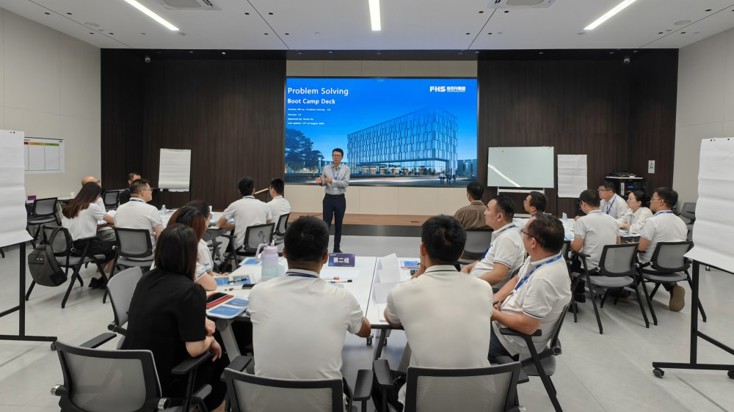
The five letters in PRIDE represent a structured way of thinking that can be applied repeatedly and refined continuously. The methodology equips managers to navigate complex business challenges: define the problem, validate the root cause, implement the solution, and reflect on the outcome—ensuring that every step is evidence-based.
02 From Listening to Solving: Building Capability Through Real-World Practice
What distinguished this program was its integration of learning and practice. The 21 participants were divided into three teams, each bringing a real challenge from its current operations and management. The mornings focused on methodologies and analytical tools; the afternoons shifted immediately to team-based practice, alternating between classroom exercises and the teams’ own business challenges.
The instructor stepped back into the role of coach, allowing participants to take ownership of their learning. Throughout the two days, everyone engaged fully with challenges drawn not from simulations, but from their own day-to-day work. By turning real business situations into the classroom, the program moved learning beyond note-taking and translated it directly into deeper analysis of business pain points and actionable plans.
03 Breaking Problems Down to Build Better Solutions: Sharpening Management Thinking Through Real Challenges
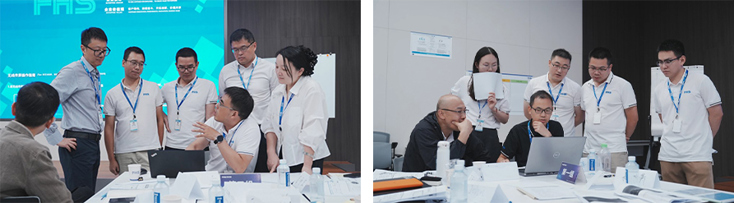
The two days of intensive practice produced more than solutions; they also sharpened the participants’ management thinking. One team initially mistook symptoms for the core problem and reached the real pain point only after several rounds of questioning. Another team relied on subjective assumptions during root-cause analysis, but ultimately used data and facts from the field to turn those assumptions into evidence-based conclusions.
From problem definition and root-cause analysis, through deeper exploration with the 5 Whys, to evaluating options with an impact matrix and selecting the best solution, participants systematically upgraded their management thinking—from experience-driven judgments to data-driven decisions, from fragmented responses to systematic solutions, and from firefighting to lasting improvement at the source. This is the central goal of the Group’s management capability-building efforts: managers must understand the business and deliver results, while also knowing how to break problems down and solve them effectively.
04 Cross-Team Exchange: Refining Solutions Through Constructive Challenge
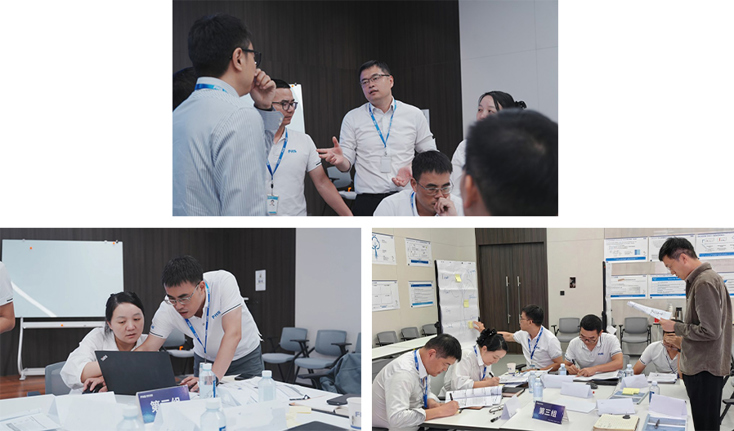
Cross-team sharing and candid peer review were among the program’s highlights. When one team presented its findings, the other two served as both audience and reviewers—asking questions, challenging assumptions, contributing perspectives, and offering suggestions. This constructive exchange continuously strengthened the solutions and helped every manager look beyond their own area of responsibility and learn from the challenges faced by others.
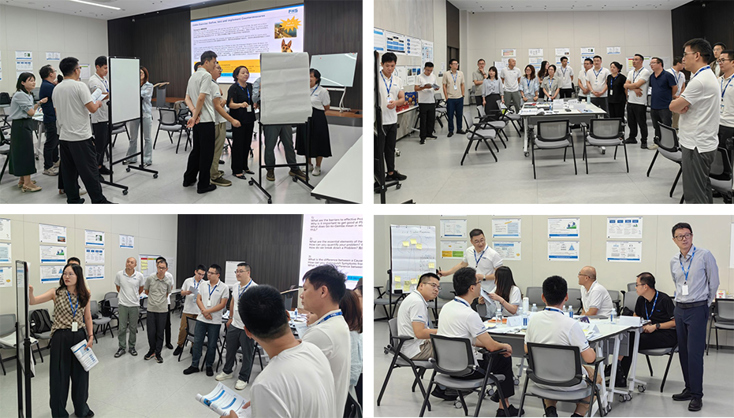
As one participant observed during the review, “I gained even more from listening to other teams break down their problems than from solving my own.” The exchange across business divisions helped overcome the limits of siloed thinking and created a microcosm of a learning organization within the Group—one in which knowledge flows through sharing and capability grows through critical discussion.
05 Training Is Not the Finish Line, but the Starting Point for Management Capability Building
The two-day intensive program has concluded, but the work has only just begun. Over the next two weeks, the three teams will put their solutions into practice. The Group’s Business Management Department will continue to track and drive implementation throughout the process to ensure that the training translates into tangible business improvements.
For the 21 participating managers, the program delivered three forms of lasting value: a transferable and reusable PRIDE problem-solving framework; solutions strengthened through collective discussion; and a network of cross-functional partners committed to progress together. Ultimately, management capability is built through repeated validation, learning, and iteration while tackling real business challenges.
The end of the program marks a new starting point for strengthening organizational capability. This problem-solving initiative—combining learning, practice, and co-creation—was both a shared investment in management methodology and a strategic step toward building a stronger management pipeline at FHS Group. From methodology to hands-on business challenges, every element served one goal: embedding the PRIDE methodology deeply in the Group’s management practices.
Talent is an enterprise’s most valuable asset, and the strength of its management team shapes the organization’s growth potential. FHS Group will remain committed to practice-oriented development and will continue to refine its systematic management talent development framework. By taking methodology beyond the classroom, the Group will enable every manager to grow through real challenges and generate sustained internal momentum for high-quality development.

Public Relations Officer
Miss Zeng
 info@ksfhs.com